- Home
- Tested by a Bogey Golfer
- Testing Equipment as an Average Golfer
- Club Fitting at 20-Handicap
I Got Fit for Clubs at a 20-Handicap. Here's Exactly What Changed (and What Didn't)
The number on the screen said 34 percent off-center. Not on a bad swing — on the one I'd have walked back to the cart feeling good about. Ray, the fitter, didn't say much. He circled something on his clipboard, reached for a different shaft, and asked me to hit five more.
That was the whole session in miniature. I've played off-the-rack clubs for a decade, always assuming fitting was for guys who actually strike it — not the guy who three-putts from twelve feet. So when a $75 fitting deal showed up near my office in March, I almost skipped it, half-afraid the numbers would be more depressing than useful.
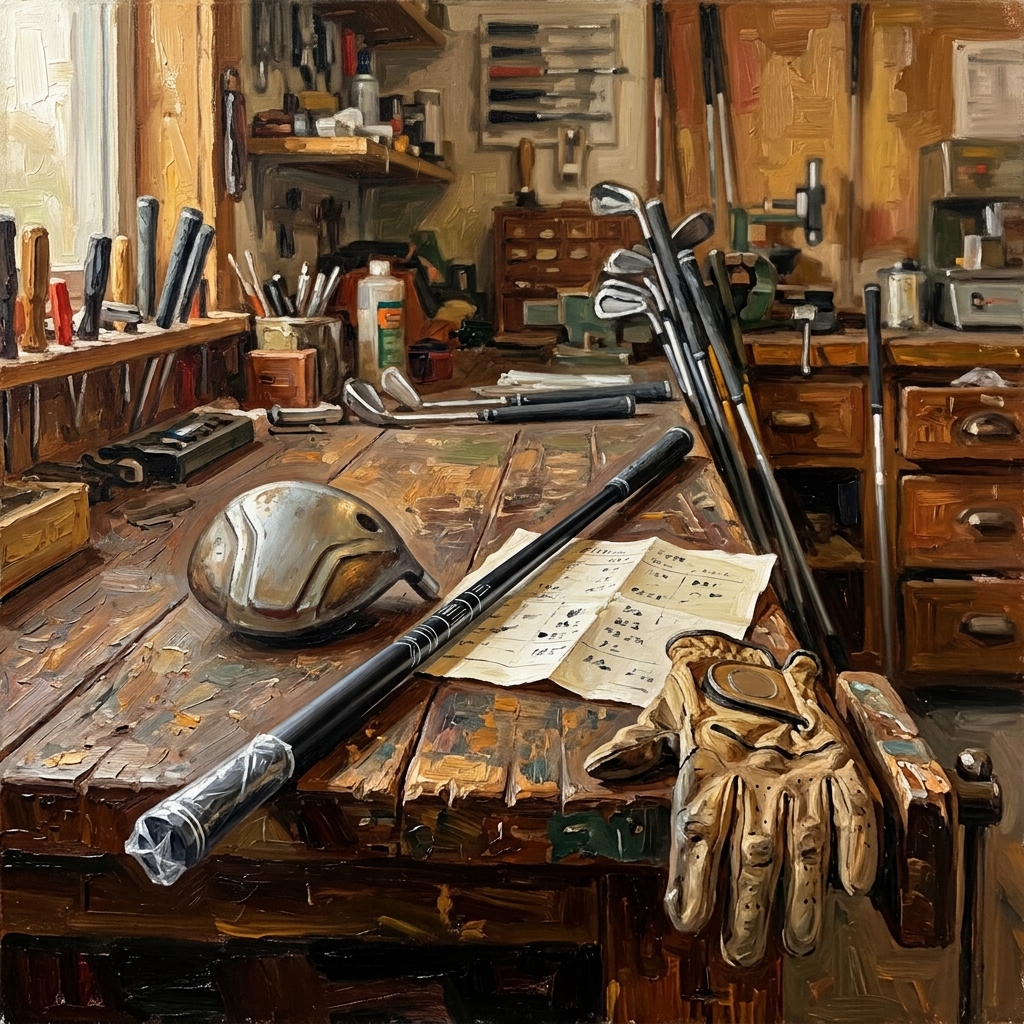
Turns out the driver wasn't lying to me. It just never got the chance to tell the truth.
Here's the direct answer: a club fitting for a 20-handicap golfer is mostly a launch monitor session revealing your real swing speed, shaft flex, and lie angle — not a swing lesson. Most bogey golfers walk out needing a softer shaft, a flatter lie angle, and a shorter club than the rack assumed. It won't fix a slice on its own, but it strips away the equipment excuse.
Why I Even Booked a Fitting at 20-Handicap
Fittings have always felt like something for the guys who are already good — the players chasing the last three shots off their handicap, not the ones still hunting for their ball in the left rough on a regular basis. I'd tell myself that once you're actually decent, you'll notice the difference; until then, any set of irons is basically the same as any other.
That theory survived exactly one Saturday. Mike, who'd gotten fit for a driver the year before mostly on a whim, kept needling me about my dispersion — a word I didn't even know applied to golf balls until he used it. "You don't hit it crooked because you're bad," he said, teeing up on 4. "You hit it crooked because that driver was built for someone six inches taller than you." I didn't believe him. I also couldn't stop thinking about it for two weeks.
What finally got me in the chair wasn't ambition — it was the $75 sale price and the fact that Dave had already booked his slot and needed a ride. I went in treating it as an experiment, not an upgrade. That's a manifesto principle I didn't consciously reach for until later: I improve my own experience, not just my scorecard, and an afternoon of watching numbers on a screen counted as an experience even if nothing got fixed.
There's an obvious objection here, and I'd have raised it myself a month earlier: isn't a fitting just a shop's way of talking you into clubs you don't need? Fair question, and the honest answer is that it can be, if you let the salesperson steer. Nothing about the process requires you to buy anything — a spec sheet costs nothing to walk out with. If a fitter won't hand you the numbers without a purchase attached, that's the moment to leave, not the moment to sign.
The shop wasn't fancy — a bay in the back of the pro shop with a screen, a mat, and a bin of loaner shafts that looked like they'd survived several presidential administrations. Ray had me hit my own driver first, cold, no warm-up. "I want your real numbers," he said. "Not your warmed-up numbers." That's the whole premise of a fitting in one sentence: it measures the golfer who actually shows up on Saturday morning, not the one who's been to the range four times this week. If you're still deciding whether your current setup is even worth the trouble of re-evaluating, it's worth first reading through what clubs you actually need in the bag — half the fitting conversation is really about whether a club deserves a spot at all.
What Actually Happens During a Fitting Session
You hit your own driver first. Ten balls, no coaching, nothing adjusted. The screen behind Ray filled with numbers I didn't understand yet — clubhead speed, ball speed, spin rate, launch angle, and a dispersion pattern that looked like a shotgun blast tilted left. He let me hit all ten before saying a word.
Then he started swapping one variable at a time. New shaft, same head — hit five. Same shaft, adjusted loft — hit five. He wasn't trying to change my swing; he was trying to find the equipment that stopped punishing it. That's the part nobody explains beforehand: a fitting isn't diagnosing your flaws so you can fix them. It's finding the gear that makes your flaws cost you less.
About forty minutes in, the shotgun-blast dispersion pattern on screen started narrowing. Not dramatically — this isn't a movie — but visibly, swing after swing, as Ray tried different combinations. I asked him at one point if my swing was actually that inconsistent or if the equipment had been amplifying it. "Bit of both," he said, "but you'd be amazed how much of 'inconsistent' is actually 'wrong tool.'" He wasn't selling me on that answer. He said it the way you'd mention the weather.
We spent the driver segment first, then moved to irons — hitting a 7-iron on the monitor with three different shaft weights and two different lie angle settings. By the time we got to the putter at the very end, I'd been standing on that mat for over an hour and my back knew it. Nobody warns you that a full-bag fitting is also, quietly, a small workout.
Dave, who booked the same afternoon in the next bay over, had the harder-sell experience I'd been worried about — his fitter kept steering him toward a $600 driver before they'd even looked at his current lie angle. Dave asked to see his own numbers first, twice, before anyone typed a price into anything. That's the one piece of advice I'd pass along before your own session: ask for your baseline numbers on your current clubs before any new equipment gets mentioned by name. A fitter who resists that request is telling you something.
🎯 What a Fitting Session Actually Involves
- ⭐ You hit your own current clubs first, cold — the fitter wants your real numbers, not your best ones
- 🔧 One variable changes at a time: shaft, then loft, then lie angle — never all at once
- 📊 A launch monitor tracks clubhead speed, ball speed, spin, and dispersion on every single swing
- ⛳ Driver usually comes first, irons in the middle, putter almost always gets rushed at the end — ask for more time on it
The Driver: Old Rack Special vs. What Actually Fits
My old driver was a stiff-flex, 10.5-degree head I'd bought off a display rack because it was on sale and the fitting rep at the store — a 19-year-old working his first summer job — told me stiff shafts were "more accurate." He wasn't lying so much as guessing, and I didn't know enough to ask him what my swing speed actually was.
My real swing speed, per Ray's monitor, sits around 89 miles per hour. That's a regular-flex number for most manufacturers, not stiff. I'd been fighting a shaft too rigid for my own swing for ten years without once questioning it, the way you drive with a tire slightly underinflated for so long you forget the car's supposed to feel different.
The fitted setup: regular flex, 12 degrees of loft instead of 10.5, and a shaft roughly 15 grams lighter than my old one. On paper that sounds like a downgrade — more loft, lighter shaft, "less serious" numbers. In practice, my carry distance moved from an average of 214 yards to 221, and my off-center hit rate dropped from 61 percent to 34 percent across the test swings. The driver picked up a few yards. What it actually gave me was a shot that stopped disappearing sideways.
The misconception I walked in with was that a longer shaft automatically means more distance, so I'd always assumed the answer to a short drive was a longer club. Ray let me test that theory directly — an extra half-inch of shaft length raised my swing speed slightly but tanked my strike quality enough that ball speed actually dropped. Longer isn't free. Every extra half-inch is more clubhead to control at the same tempo, and past a certain point you're trading center-face contact for a number on a spec sheet that never shows up on the course.
If you've been curious what a season without the big stick even looks like, I actually tried playing eighteen holes without a driver at all last spring — worth a read if the driver fitting numbers here make you wonder whether you need the club as much as you think you do.
Do Your Irons Actually Need Fitting If You're Not Consistent Yet?
Yes — and it's a bigger deal than the driver, even though nobody talks about it that way. The instinct is to assume iron fitting is only worth it once your swing is repeatable enough to actually benefit from precision. It's the opposite. Inconsistent contact is very often a lie-angle problem wearing a swing-flaw costume.
Here's why: if your irons sit too upright or too flat for your setup, the toe or heel of the club digs into the turf before the face squares up, and every shot curves the same predictable, unhelpful way regardless of what your swing is actually doing. Ray had me hit five 7-irons off a lie board — a mat that shows exactly where the sole makes contact — and every single one showed the toe striking first. My irons were two degrees too upright for how I actually stand at address.
The fix wasn't a new swing thought. It was bending the existing heads two degrees flat, shortening the shafts by half an inch, and moving me from standard to midsize grips because my hands were engulfing the stock grip without me ever noticing. None of that required me to change anything about how I swing. All of it changed what the ball did when I did.
There's a version of this that matters even more if you're on the taller or shorter end of average — standard-length irons are built around a height that a lot of golfers simply aren't, and the compensation shows up as reaching or hunching at address, not as an obvious equipment complaint. Ray measured my wrist-to-floor distance along with my height, which is the actual number that determines correct shaft length, not a guess based on how tall I look in a mirror. If you're 6'3" or 5'5", that measurement alone is worth the visit before you touch anything else in the bag.
🔧 The Spec Changes That Actually Mattered
- 🔧 Lie angle: 2° flat — the irons were catching the toe first without me ever knowing it
- 📍 Shaft length: half an inch shorter, which sounds tiny and genuinely isn't
- ⭐ Grip size: standard to midsize — smaller hands don't automatically mean smaller grips, and mine had been guessing wrong for years
- 💡 Shaft flex: regular instead of stiff, across the whole set, not just the driver
The Putter Nobody Thinks to Get Fit
Everybody skips the putter. I nearly did too — after ninety minutes on the mat, the last thing I wanted was to spend twenty more minutes rolling balls across a strip of carpet. Ray talked me into it, and it turned out to be the single most useful five minutes of the whole session.
My putter was two inches too long for how I actually set up over the ball, which meant I was standing taller and more upright at address than my natural posture, breaking my wrists slightly through the stroke to compensate. Two inches shorter and a loft adjustment later, the ball started rolling end-over-end instead of hopping off the face. It wasn't dramatic on camera. It was dramatic on the scorecard three weeks later.
Ray also asked whether I'd ever tried a mallet instead of my old blade, since mallets tend to forgive off-center putts more than a blade does — a real question worth its own answer if putting consistency is your bigger issue than putting length. I stuck with a blade because I liked the feedback, but he didn't push either way, which is the sign of a fitter who's actually fitting you instead of moving inventory.
What I Actually Paid (and What I'd Pay Again)
The fitting itself was $75, credited toward anything I bought that day — which is common at shops trying to convert fittings into sales, and worth asking about before you book. Here's the honest breakdown of where the money actually went, and where I talked myself out of spending it.
The driver: I bought new — $329 for a mid-tier model in the fitted spec, since my old head was genuinely a decade old and the technology gap alone justified it. The irons: I didn't buy a new set. I kept my existing heads and paid $280 to have them re-shafted, re-gripped, and bent to the new lie angle, which got me 90 percent of the benefit of new irons for a third of the cost. The putter: free — a bench adjustment, bent and re-gripped on the spot for $20.
Total spend: right around $650, against the roughly $900 I'd have dropped blind on a full new set at a big box store, guessing at specs the way I did a decade ago. The cheap way isn't skipping the fitting — it's using the fitting to figure out exactly what you don't need to replace. I still buy budget balls, by the way; six months of testing cheaper golf balls taught me that's one corner worth cutting even after all this.
Not every shop credits the fitting fee toward a purchase, so ask that question before you book, not after. If yours doesn't, treat the fee itself as the whole cost of the experiment and walk away with just the spec sheet — you lose nothing by shopping that sheet around for the best price on the actual clubs. It's the same instinct that got me to actually try a rangefinder for the first time instead of guessing yardages for another season: cheap, specific experiments beat vague upgrades every time.
Did It Actually Lower My Score? The Honest Verdict
Here's the part I won't dress up. My handicap moved from 20.4 to 18.9 over the following three months — real, but not the kind of swing you'd brag about at the 19th hole off equipment alone. What actually dropped wasn't my best score. It was my worst ones.
Before the fitting, a bad ball-striking day meant two or three drives in the trees and at least one iron shot shanked sideways off that toe-first contact. After, the misses got smaller. Same number of mediocre swings, less damage per swing. That's not the story equipment ads tell you, and it's the truer one: a fitting doesn't make you better at golf. It makes your bad swings cheaper.
I earn the right to brag about very little in this game, and I'm not about to start claiming a launch monitor turned me into someone worth watching. What I will say, without hedging, is that I stopped losing balls in the same three spots on my home course, and that alone bought me back twenty minutes a round I used to spend apologizing to the group behind us. If you want to see what a real 20-handicap's numbers look like across a full season, not just one good fitting day, that's a rabbit hole worth going down separately.
Dave's results were the more interesting comparison, honestly. He'd already been fitted for a driver the year before and came into this session mostly for irons — his handicap barely moved either, from 16.8 to 16.1, but he stopped hitting his signature push-slice on approach shots almost entirely, which is the kind of specific, boring, real change nobody puts in a highlight reel. Two different guys, two different bags, and neither of us walked away a different golfer. We both walked away a slightly less punished version of the same one, which tracks with everything the Golfeaser Manifesto has ever said about improving your own experience instead of chasing a number.
Would I Recommend This to a Buddy at Your Handicap?
Yes, with one condition attached: prioritize irons and putter fitting over driver fitting if you're choosing where to spend limited money. The driver gets all the attention because it's the club everyone judges you on off the first tee, but it's one swing a hole. Your irons and putter are every other swing you take.
If your shop offers a fitting-only rate with no purchase required, take that option first and shop the spec sheet around afterward — most reputable shops will honor another shop's fitting numbers on a build. And don't skip the putter portion even if you're exhausted by the time you get to it. Mine was the cheapest fix in the whole session and the one I noticed fastest.
One thing worth doing before you spend a dime on equipment at all: a single real lesson can tell you whether some of what you're blaming on your clubs is actually your setup, which is exactly what I found out taking one lesson so nobody else had to. Fitting and instruction solve different problems, and it's worth knowing which one you actually have before you book either — the broader question of whether lessons are worth it at our level is worth answering honestly before you spend on either one.
If your budget genuinely only stretches to one thing this season, a fitting still beats chasing whatever's trending — I've been down that road testing whether a viral swing tip actually works for a bogey golfer, and the honest answer is that free advice fixes free problems. A lie angle that's fighting you every swing isn't a free problem, and no amount of tempo cues on your phone screen bends steel back into alignment.
📋 What Actually Happened When I Got Fit for Clubs at 20
- 😤 Before: swinging an off-the-rack driver and irons bought on a teenager's guess a decade ago, never questioned since
- 💡 The experiment: one 90-minute fitting session, launch monitor numbers, zero swing changes attempted
- 🎯 What changed: distance barely moved, but off-center hits and dispersion dropped hard, and three-putts fell once the putter length got fixed
- 🏌️ The verdict: worth it — but only after you're honest with yourself about which parts of the bag you actually use every round
🏌️ Got a Golf Story?
Share it with us. Every story we publish earns the author a free copy of The Weekend Golfer's Social Playbook — our three-step system for finding your people, running trips that actually come together, and earning the right to brag at the 19th hole.
Or join the Golfeasers — free weekly content for people like us.
The Questions Everyone Asks Before They Book One
Is a club fitting worth it if you're not a good golfer? Yes — arguably more than it's worth for a scratch player. A fitter isn't grading your swing; they're matching equipment to whatever swing you actually bring on a given day, and inconsistent, high-handicap swings are exactly what fitting is built to work around.
How much does a full bag fitting cost? Expect somewhere between $75 and $200 for the session itself at a mid-size shop, often credited toward a purchase if you buy that day. A driver-only fitting runs cheaper, and some big-box stores throw a basic version in free, though the depth of the session varies a lot by location.
Do you have to buy new clubs after getting fit? No. A good fitter hands you the exact spec sheet — shaft flex, lie angle, length, grip size — and you can take that to any shop, or in a lot of cases just get your current heads re-shafted, re-gripped, and bent instead of replacing the whole set.
How long does a fitting session actually take? Budget 60 to 90 minutes for a full bag, less if you're only there for the driver. Almost all of that time is trial and error on the launch monitor, not paperwork or upsell conversations.
What should a 20-handicapper get fit for first if money's tight? Irons, not driver. A lie angle that's off by even a couple of degrees affects every full swing you take in a round, while a slightly wrong driver mostly costs you accuracy on one club, once a hole.
More Honest Tests From the Bag
- Push Cart vs. Carry vs. Riding Cart: What a Bogey Golfer Actually Needs
- GPS Watch vs. Phone App: Which One a Weekend Golfer Actually Needs
- How Many Golf Balls You Actually Need in the Bag
- Soft vs. Hard Golf Balls: What Actually Changes at a Bogey-Golfer Swing Speed

Johnny is a 25-year weekend golfer who's double-booked tee times, forgotten his clubs an hour from the course, and made pretty much every other trip-planning mistake there is — so you don't have to. Guided by The Golfeaser Manifesto, he started Golfeaser.com to prove that weekend golfers are a special, funnier breed who improve the experience, not just the scorecard. He's also the guy behind The Weekend Golfer's Social Playbook — a three-step system for finding your people, running trips that actually come together, and earning the right to brag at the 19th hole.
