- Home
- Tested by a Bogey Golfer
- Strategy Tests
- One Ball, One Month
I Played the Same Golf Ball for 30 Straight Rounds — Here's What I Learned
I have a Costco bucket in my garage with something like forty golf balls in it. Titleists, Callaways, three different Bridgestones, a couple of range balls that migrated home by accident, and one glow-in-the-dark ball from a scramble in 2019 that I have never once used. None of them mean anything to me. I grab a fistful before every round the way you'd grab loose change from a dish by the door.
So I decided to stop. For 30 straight rounds, I played one specific ball — the same one, marked, tracked, and never voluntarily swapped out — instead of reaching into the bucket every Saturday morning. It's the kind of small, slightly stubborn experiment that fits right in with the rest of what gets tested on this site — not because it'll shave strokes off anyone's handicap, but because most of us have never actually questioned the habit. If you've read any of the other things I've tested as a bogey golfer, you already know I'm not chasing a better swing here. I'm chasing what actually changes when a weekend golfer changes one small habit and sticks with it.
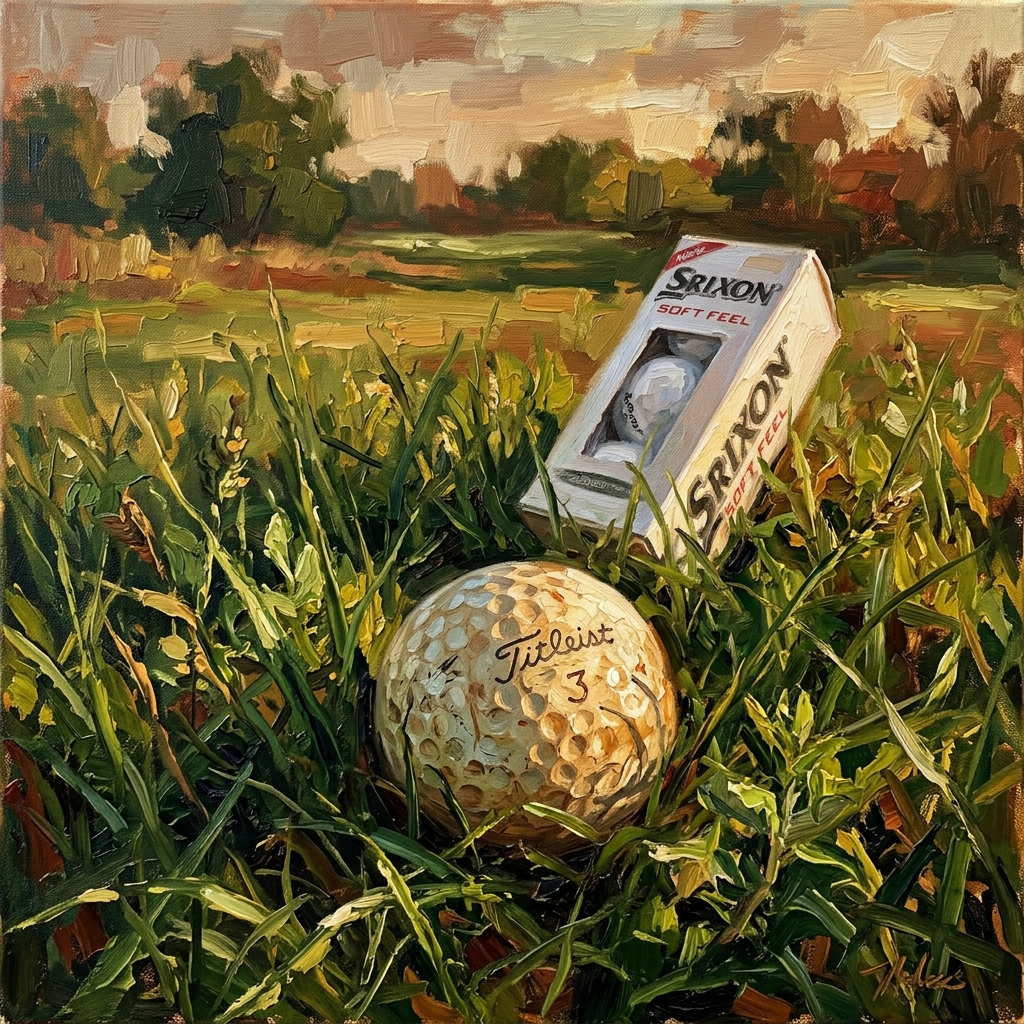
Somewhere around week three I stopped checking the cover for scuffs before I teed off. I just hit it.
Playing the same golf ball for a month means committing to one marked ball for every shot — tee, approach, and putt — instead of swapping in a fresh one whenever it picks up a scuff or you just feel like it. A cosmetically worn cover barely changes flight at a bogey golfer's swing speed; the real risk the whole month is losing the thing outright. The bigger change wasn't in how the ball performed. It was in how much I stopped thinking about it.
What Made Me Try This in the First Place?
Dave asked me on the range one Thursday why I was digging through three different sleeves before I'd even hit a bucket of practice balls. I didn't have a real answer. I've just always done it — grab whatever's on top, tee off, lose it or don't, grab another one on 4 if I lost that one too.
Then I did the math on what "whatever's on top" actually costs. Not in dollars — I've written about that already — but in the number of decisions I make before a round even starts. Which ball. Which color, if it matters that day. Whether this one's "lucky" or just old. None of it changes my score. All of it takes up a little bit of the attention I could be spending on the actual round.
I'm a weekend golfer, not a tour pro chasing marginal gains. But I got curious what happens if I just picked one ball and made it mine for a month, the way you'd wear one watch instead of rotating through a drawer of them.
The Rules I Set for Myself
I needed real rules, or this was just going to be me pretending to commit and quietly grabbing a fresh ball the first time I three-putted. So before round one, I wrote down exactly what "one ball" meant.
🔧 The Rules I Set for Myself
- ⭐ One ball, marked with a Sharpie dot on the number, used for every stroke of every round — including practice putts before I teed off
- ✅ It comes out of the bag any hole it's genuinely lost — I'm not walking a hazard for 20 minutes holding up a group behind me
- 🚫 It does not come out of the bag for being scuffed, muddy, or "not looking like a tournament ball anymore"
- 💡 If it cracks or the cover splits, that's a legitimate retirement — not a loophole I get to decide is close enough
Simple on paper. Harder than I expected the first time I stood over a ball with a grass stain running halfway across it and every instinct told me to just tee up a clean one instead.
How I Actually Picked the Ball
I almost overthought this part, which would have defeated the whole point. I grabbed a mid-compression ball from the bucket — nothing premium, nothing I'd bought specifically for the test — mostly because it was already sitting on top when I dumped the bucket out on the kitchen table.
That's not a bad way to decide, honestly. If you're the kind of golfer who's never dug into whether a softer or firmer ball actually suits your swing speed, this test is a reasonable excuse to finally figure it out — I put together a full breakdown of soft versus hard golf balls for bogey-level swing speeds if you want to pick with a little more intention than I did.
The one thing I'd actually recommend checking first is how many balls you're carrying in the bag in the first place, because a one-ball test only works if you can find the thing again after a bad swing. I keep way more spares in the bag than I need on a normal week — most weekend golfers do — and there's a real answer to how many golf balls you actually need to carry that has nothing to do with how many you'll lose.
Does a Scuffed-Up Ball Actually Fly Differently?
Short answer: not enough for someone at my level to notice, and not for the reason you'd think. A ball has to be cracked or seriously cut — not just cosmetically worn — before its flight changes in a way that matters at recreational swing speeds. The Rules of Golf back this up in their own way: during a hole, you're required to finish with the ball you started it with unless it's lost, out of bounds, or unfit for play, and "unfit" has a real bar to clear. A scuff mark doesn't come close to it.
What I actually noticed instead was mental, not physical. Standing over a ball that had a visible mark from a cart path incident on 14 the week before, I caught myself flinching slightly before I swung — like the mark itself was going to cause the mishit. It didn't. The mishit, when it happened, came from the same place mishits always come from with me, and it had nothing to do with the ball.
The one place I paid closer attention than usual was on and around the green. A ball with a rough patch on the cover can occasionally take a slightly different bounce or roll off-line on a bladed chip, and putting is where a bogey golfer's brain will happily invent an excuse for a missed read. I tracked it for two weeks specifically to be honest with myself about this, and the honest answer is that my three-footers missed for the same reasons they always miss — a bad line, a decelerating stroke, not a scuffed cover deciding to wobble.
The Day I Nearly Lost My Only Ball
Week two, the ninth hole at my home course, a par 3 with water short and left. I pulled my 7-iron just enough to skip it once off the surface before it sank — the kind of shot where you already know, mid-flight, exactly what's about to happen.
I had a legitimate rule-based reason to drop a new ball right there. I almost did. Instead I stood at the edge of the pond for two full minutes doing the math on whether the water was low enough to see the bottom near the bank, which is not a thing a reasonable person does over a $3 golf ball. It was sitting in about eight inches of water, visible if you knew exactly where to look. I rolled up a pant leg further than I'd like to admit in front of a group waiting on the tee behind me.
Getting it back mattered more than it should have. That's the part of this test I didn't expect going in.
It happened again, smaller stakes, on round nineteen — a wild slice into the trees on 15 that I was fully prepared to write off. Under the normal rules of the group, this is exactly the moment where you drop a provisional and move on without a second thought, and there's a right way to handle that search so you're not the guy holding up the whole course; I wrote about the etiquette side of it separately in what to do when you can't find your ball. What was different this time was how long I was actually willing to look before giving up. Normally I give a ball about ninety seconds of my attention. That one got the full five minutes the rules allow, because it wasn't just any ball anymore.
One Ball vs. the Bucket Rotation: What Actually Changed
None of this shows up as a stroke saved on the scorecard, so it's easy to dismiss as nothing. But laid out side by side, the difference between grabbing from a bucket of forty and carrying one marked ball is bigger than I expected going in — not in performance, but in how much attention each approach quietly asks of you.
The bucket rotation isn't wrong — it's just noise I'd never questioned. Every ball in that bucket cost the same three or four dollars whether I used it for one hole or thirty rounds, and I'd never once tracked which. One ball, marked and kept, turned an invisible habit into something I could actually see happening.
This is the same instinct behind the tour pros' One Ball Rule, which requires the same make, model, and color of ball for an entire competitive round — though that rule exists for a completely different reason than mine. Tournament officials use it to stop players from switching to a softer or firmer ball mid-round to chase a small performance edge. I wasn't chasing an edge. I just wanted to know what happens when you stop treating something you swing at 90 times a round like it's disposable.
What This Taught Me About the Rest of My Strategy
This test sits under the same part of the site as every other course-management experiment I've run, and the connection wasn't obvious to me until about round fifteen. Once I stopped treating the ball itself as a variable, I noticed how many other small decisions I make mid-round out of pure habit instead of any real thought — the club I grab without checking the yardage twice, the read I commit to on a putt before I've actually looked at it from both sides.
It's the same lesson underneath playing smart when you're not playing well: most of the strokes a bogey golfer gives away aren't technique, they're unexamined habit. I found the same thing when I tried aiming for the middle of the green for a month instead of hunting pins, and again when I played ready golf religiously for ten rounds. Cutting out one small decision tends to clear room for a better one somewhere else. If your short game struggles more on par 5s than anywhere else, the same discipline applies — I broke down a similar approach in a piece on par-5 strategy for short hitters that's built on the identical idea: fewer choices, better swings.
What My Group Said When They Noticed
Mike clocked it before anyone else did, somewhere around round four, when I fished the same ball out of the cup on 6 that he'd watched me hit into the same fairway bunker on 2. "You still playing that one?" wasn't really a question. It was the start of him keeping score on my behalf, which is its own kind of accountability I hadn't planned for.
By round ten, the group had started policing it better than I was — someone would spot my Sharpie dot in the rough before I did and just point, saving me the search. It made me a little more careful about where I aimed, honestly, in a way that had nothing to do with scoring better. I didn't want to be the guy who lost his own experiment on the 4th hole in front of three witnesses.
Jim, who has never once let a bit go unmilked, started calling it "the chosen one" by round twelve and asking before every tee shot whether today was the day I'd finally set it free into a water hazard. It became a running bit that outlasted the actual experiment — three weeks after the month ended, he was still asking what happened to "the chosen one," and I still don't have a satisfying answer beyond "it's in a drawer, retired, like it earned a rocking chair."
I'm a better playing partner when I'm not the one making everyone wait while I dig through a pocket for a ball I don't care about. That part of it connected to something I already believe about this game — the group runs better when nobody's fumbling.
Would I Recommend This to Another Weekend Golfer?
Yes, and it's not close. Not because it fixed my swing — it didn't touch my swing — but because it removed a decision I never needed to be making in the first place. I am a weekend golfer who plays once a week; I don't need a fresh-out-of-the-sleeve ball on the first tee to prove anything to anyone standing there.
The verdict comes with one honest caveat. Pick a ball you actually like the feel of off the putter, because you're about to spend a month getting to know it intimately, cart-path scuff and all. And if you're the kind of player who genuinely loses two or three balls a round in the woods, this test will just turn into an expensive, frustrating restart cycle — know that going in before you commit to it.
What Happens When the Ball Finally Dies?
Mine made it 26 rounds. Not lost — cracked, a hairline split near the number after a thin shot off a cart path that I felt in my hands before I saw it. I retired it the way you'd retire anything that had earned it, which is a strange thing to feel about a $3 golf ball, and I mean that completely honestly.
I finished the last four rounds of the month on a second ball, marked the same way, same rules. Round 31 onward, I went back to the bucket — but I noticed something I didn't expect. I still reach for the same three or four balls in there more often than the rest. The habit didn't fully undo itself. That's probably the real result of this whole month.
📋 What One Ball Taught Me That a Dozen Never Did
- 😤 Before: A bucket of 40 balls and zero relationship with any single one of them
- 💡 The experiment: One marked ball, every round, for 30 rounds — retired only if lost or genuinely cracked
- 🎯 What changed: No measurable difference in score, but noticeably less pre-shot clutter and one very real scramble to save it from a pond
- 🏌️ The verdict: Worth doing — the value isn't in the ball, it's in one less thing to think about before you swing
This whole test connects to something I keep coming back to on this site: I improve my own experience, not just my scorecard. A ball I know intimately, scuffs and all, did more for how I felt standing over a shot than any fresh sleeve ever has. That's not a strokes-gained argument. It's just true.
If you've never really thought about which ball you're playing with — like most of the guys in my group, honestly — you might be surprised how much decision fatigue was hiding in something that small. Before you swap in a new sleeve this weekend, it's worth checking what actually helps your game and what's just habit; I broke down some of that in what clubs you actually need as a bogey golfer, and the ball conversation deserves the same honest look I gave my clubs and my six months without premium balls.
🏌️ Got a Golf Story?
Share it with us. Every story we publish earns the author a free copy of The Weekend Golfer's Social Playbook — our three-step system for finding your people, running trips that actually come together, and earning the right to brag at the 19th hole.
Or join the Golfeasers — free weekly content for people like us.
What a Bogey Golfer Actually Wants to Know Before Trying This
Does playing the same ball for a month actually lower your score?
Not directly, and I wouldn't claim it does. What it changes is how much you're thinking about the ball instead of the shot, which for a lot of weekend golfers is worth more than a stroke or two on the card.
Is it against the rules to play a scuffed golf ball?
No. A ball only has to come out of play if it's genuinely cracked, cut, or otherwise unfit — cosmetic wear from normal play doesn't disqualify it. You're required to finish a hole with the same ball you started unless it's lost, out of bounds, or you're taking relief.
How do you tell your marked ball apart from your buddies' balls?
A Sharpie dot on the number and a second small mark near the logo did it for me every time. If your group already plays the same brand, add a second color dot so nobody's guessing whose ball is in the fairway.
What happens if you lose it for good halfway through?
You mark a new one and keep going — the point isn't a perfect unbroken streak, it's breaking the habit of grabbing a random ball without thinking. I lost my first ball on round 26 and finished the month on a second one under the same rules.
Do you need an expensive ball for this to be worth trying?
No. Pick whatever ball you already like the feel of off the putter and can find easily in the rough. The experiment is about the habit, not the price tag — a $3 ball taught me exactly as much as a $5 one would have.
Does this still work if you're playing a different course every week?
Yes — the course doesn't matter, the ball does. If anything it's easier to keep track of on an unfamiliar course, because you're already paying closer attention to every shot instead of playing on autopilot the way you might at your home track.
Keep Reading Before Your Next Round
- Par-3 strategy for golfers who just want to make bogey
- I played to the 150 marker all round for a month
- I stopped reading putts for a month — just hit it
- What a real 20-handicap's stats actually look like
- The best and worst golf tips, tested by an average golfer

Johnny is a 25-year weekend golfer who's double-booked tee times, forgotten his clubs an hour from the course, and made pretty much every other trip-planning mistake there is — so you don't have to. Guided by The Golfeaser Manifesto, he started Golfeaser.com to prove that weekend golfers are a special, funnier breed who improve the experience, not just the scorecard. He's also the guy behind The Weekend Golfer's Social Playbook — a three-step system for finding your people, running trips that actually come together, and earning the right to brag at the 19th hole.
