- Home
- Tested by a Bogey Golfer
- Strategy Tests
- A Month of Not Reading Putts
I Went a Full Month Without Reading a Single Putt (Just Walked Up and Hit It)
Standing over a 12-footer on the 4th green, I did the thing I always do. Walked around the hole, squatted behind the ball, squinted at a slope I couldn't actually see, stood back up, and still guessed. Forty-five seconds of theater for a putt I was going to misread anyway.
Dave was already three steps toward his ball, not even watching. That was the moment. Not some grand epiphany — just the quiet realization that my "read" wasn't reading anything. It was a ritual I'd copied from watching golf on TV, performed by a guy who has never once correctly identified a double-break in his life.
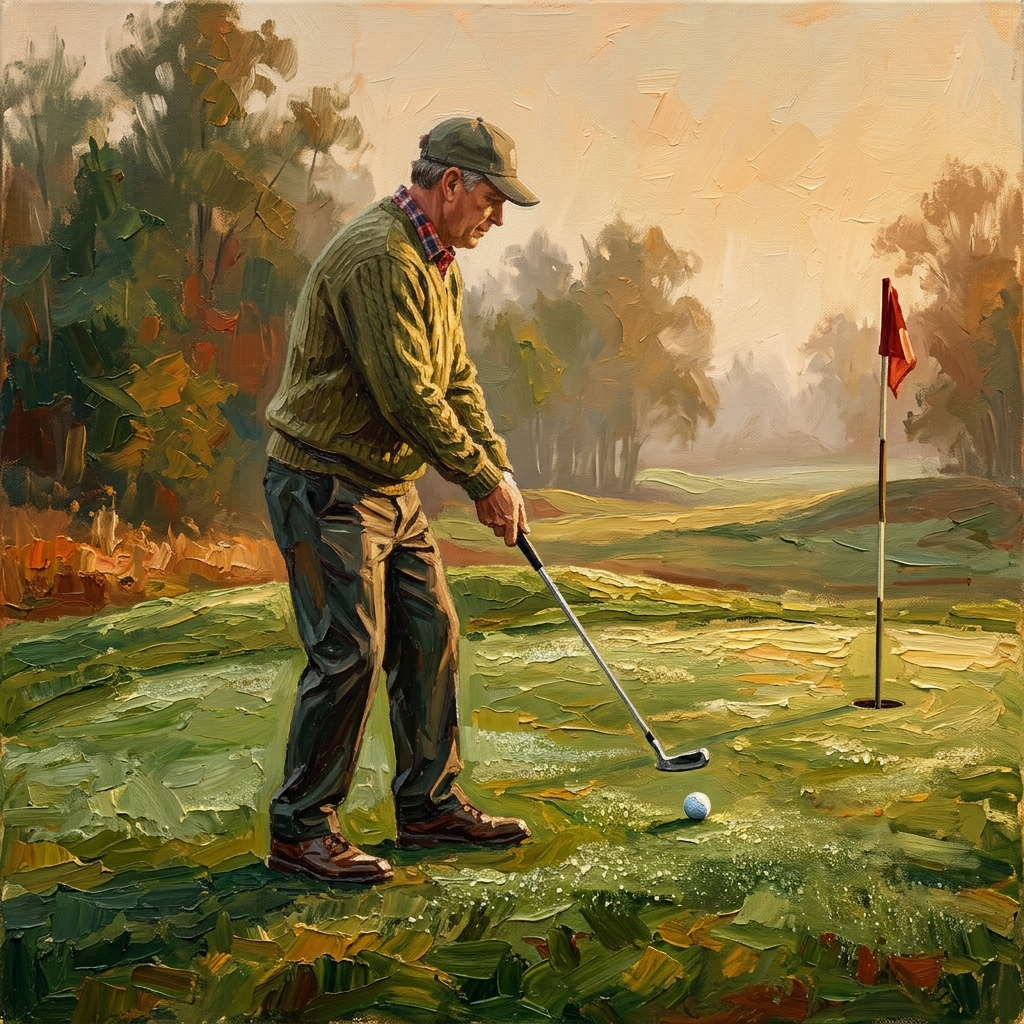
Turns out the read was for my benefit, not the ball's — the ball never once cared what I thought.
No — for most bogey golfers, skipping the formal green-read doesn't cost as many strokes as you'd think it does. After a month of walking straight up to the ball and hitting it on instinct, my putts per round barely moved and my rounds got noticeably faster. The one place it actually cost me was long breaking putts, where a real look still earned its keep.
Here's the thing nobody talks about: most of us aren't reading greens. We're performing reading greens. There's a difference, and it took a month of cutting the performance out entirely for me to see it.
I've been playing once a week for about 25 years, and somewhere in there I picked up a crouch-and-squint routine without ever checking whether it worked. This is what happened when I finally checked, as part of the ongoing pile of honest strategy tests I keep running on myself as a card-carrying bogey golfer.
Why I Even Tried This
It started with a bet, sort of. Mike timed me on the 7th green — from the moment I reached my ball to the moment I struck the putt — and it was 51 seconds. For a 15-footer. On a green I'd get right maybe one time in four.
That's the part that stung. I wasn't slow because I was careful. I was slow because I was pretending to be careful, and the group behind us on a Saturday morning doesn't care about the difference.
I improve my own experience out there more than I improve my scorecard, and standing around squinting at grass wasn't improving anything — not my score, not my pace, not the vibe of the round. So I made myself a rule: for one full month, I wasn't allowed to formally read a putt. Just walk up and hit it. Same instinct that got me through a decade of ready golf on the drop zone and the tee box — I just hadn't applied it to the green yet.
What "Not Reading Putts" Actually Meant
Did I really hit every putt completely blind? No — and that distinction matters, because it's the difference between an honest experiment and a gimmick. I still saw the green. I just stopped performing the ritual of reading it.
So what were the actual rules? Three of them, and I wrote them on the inside of my scorecard so I couldn't quietly cheat: no crouching behind the ball, no walking around to check from the low side, and no more than about ten seconds from reaching my ball to starting my stroke. I could glance at obvious slope on the walk in — a green tilted toward a pond isn't a secret — but the formal routine was gone.
Why that specific line? Because that's where the real debate lives. Nobody argues that a putt rolling visibly toward water needs a study session. The argument is whether the crouch-squint-plumb-bob routine most of us do on every putt, including the flat six-footers, actually earns its 40 seconds.
What did that look like on an actual green? On the 11th hole in week two, I had an 18-footer with what looked like a gentle left-to-right roll from the fairway. Old me would've crouched behind it, walked to check the low side, and settled on "maybe a cup outside left." New me walked up, glanced at the general shape of the green on the way in, and hit it firm at the edge of the cup. It broke about a cup and a half — more than I'd have guessed either way. Some reads were never going to save me.
🎯 The Rules I Actually Followed
- ✅ Glance at obvious slope on the walk in — that's normal vision, not a "read"
- 🚫 No crouching behind the ball, no plumb-bobbing, no walking the low side
- ⭐ Ten seconds max from reaching the ball to starting the stroke
- 💡 The rule applied to every putt, short or long — no quietly exempting the scary ones
The First Week: Chaos or Clarity?
Three-putted the first green. Then the second. By the turn on day one I was five over on the greens alone and Mike was grinning like he'd already won the Nassau.
But something odd happened around the back nine. I stopped thinking about putting entirely. There was no more standing over the ball rehearsing a read I didn't trust anyway — I just walked up, picked a spot, and let it go. The putts weren't better yet. The head was quieter, and that was new.
The real test came the following Saturday, on a course none of us had played before — a state park track Dave had booked for a change of scenery. New greens, unfamiliar grain, zero history to lean on. Old me would've been miserable there, over-reading putts I had no actual data for. New me had already stopped pretending the data existed anywhere. It turned out to be the most relaxed round of the whole month, on the one course where I had every excuse to be tense.
"But Aren't You Just Guessing Blind?" — The Skeptic's Objection
Dave raised this exact question walking off the 9th green in week three, and it's worth answering honestly rather than waving it off. Isn't skipping the read just gambling with extra steps?
Not quite. A read tells you the line. Speed is what actually controls whether a bogey golfer's putt goes in, and speed comes from feel, not from forty seconds of study. The same logic already drives how I approach a par-3 when I'm not going to reach the flag anyway or lay up short on a par-5 I have no business going for in two — commit to a simpler decision instead of overthinking a complicated one you can't execute reliably regardless.
Doesn't confidence come from actually knowing the line, though? For a scratch player, probably. For a bogey golfer, confidence comes from committing to a stroke without a voice in your head arguing with itself mid-swing. That's more of a mental game problem than a green-reading problem, and it was the single biggest thing this month changed that never showed up on the scorecard.
Short Putts vs. Long Breaking Putts: Where It Actually Mattered
Inside six feet, the read barely mattered at all. I'd been over-reading these for years anyway — squatting behind a three-footer like it was a tour-level knee-knocker on 18. Cutting the routine here cost me nothing. If anything, the putts went in more often, because I wasn't standing over the ball long enough to talk myself into a phantom break that wasn't there.
Past fifteen feet with real break, the read started earning its keep. This is where the experiment actually hurt. On a 22-footer on the 14th hole in week three, a putt that looked flat but had a foot and a half of break hiding in it left me a six-foot comebacker I wouldn't have had with even a five-second look from behind the ball. That wasn't a fluke — it happened three or four times across the month, always on the longer, subtler ones.
So which side of that line matters more to your actual score? For most of us, way more putts in a round fall in the first category than the second. A typical bogey-golfer round has maybe four or five putts past fifteen feet with meaningful break, and a dozen-plus inside six feet where the read was pure theater. Cutting the theater and keeping a quick look on the genuinely tricky ones is the honest middle ground — and it's basically what I ended up doing by week three without meaning to.
Did My Putts Per Round Actually Change?
Not much, honestly. I'd been tracking my own putts per round for about a year before this — the same self-tracking habit behind what a real 20-handicap's stats actually look like — so I had a real baseline to compare against, not a guess. Before the experiment I was averaging right around 35 putts a round. Over the month, that came in at 34.
One putt better, across an entire month of skipping the routine I used to think was load-bearing. That's not nothing, but it's not the disaster I expected walking in, and it's not the miracle I secretly hoped for either.
That last number is the one I'd rather not admit, but the whole point of a Golfeaser test is not fudging the parts that didn't work. Three-putts specifically on longer, breaking putts went up — from about one a round to closer to two. The short game got faster and stayed about even. The long game got faster and got slightly worse. Both things are true at once.
The Pace-of-Play Payoff Nobody Warned Me About
Here's what I didn't expect going in: the biggest change wasn't to my score at all. It was to the round itself. Cutting roughly ten minutes off my time on the greens meant we were regularly finishing 30 to 40 minutes earlier than usual, and that math compounds across a foursome fast.
I make my foursome better by being the guy who's ready to hit, not the guy holding up the group behind us, and that shift showed up in ways I didn't track on a scorecard. Somewhere around week two, Jim stopped bringing snacks for the back nine because we were finishing before he needed them. Small thing. Told me everything.
By the last Saturday of the month, we were off the course early enough to actually sit at the 19th hole for a full round of drinks instead of the usual rushed one, and nobody had to say why. The math on ten fewer minutes a round times four guys times eighteen holes had just quietly showed up as an extra hour of actual time together, which is the whole reason any of us are out there in the first place.
What This Did to Our Money Games
In a casual Nassau, faster reads changed almost nothing about who won. The money moves on ball-striking and nerve, not on how long you crouch behind a putt, and that held true across the month — I didn't win or lose more than usual because of this.
In our regular gimme-heavy rounds, it changed the rhythm more than the money. We run a loose group where borderline putts sometimes get waved in, and the honest etiquette around who gets a gimme and who doesn't already relies on quick, confident calls. Moving faster through my own reads made those calls easier for everyone, not slower.
Where it genuinely helped was on skins. Nobody likes standing around while one guy studies a putt that's going to decide a $2 skin. Cutting my routine meant fewer moments where four grown men were silently staring at the back of my head, waiting. It's a smaller cousin of the discipline behind putting everything out with no gimmes at all — commit and go, rather than deliberate and stall.
The Mistake I Made Taking This Too Far
Week three, 16th green, a 30-footer with what turned out to be a nasty double-break I genuinely couldn't see from the fairway. I stuck to the ten-second rule out of stubbornness more than good judgment and blew it eight feet past, dead straight through a break I'd have caught with even a casual glance from the side.
That putt is the whole caveat in one shot. The rule isn't "never look at anything." It's "stop performing a forty-five-second ritual on putts where the performance was never the thing helping you." A real double-break on a green you've never seen deserves a few extra seconds. A flat six-footer on your home course does not. Confusing the two — in either direction — is the actual mistake, not the no-read philosophy itself.
The Honest Verdict: Would I Keep Doing This?
Yes, with one adjustment, and I'm not hedging on that. I've kept the "no crouching, no plumb-bob, ten seconds" rule for everything inside fifteen feet, permanently. It cost me nothing there and saved real time every single round.
For putts past fifteen feet with real break, I gave myself back a genuine five-second look — not the full ritual, just enough to see what the ball's actually going to do before I commit. That one change alone brought my long-putt three-putts back down close to where they started, without giving up most of the time I'd gained. If a gadget could've told me that faster, I'd have believed the putting mirror I tested a while back over my own eyes — it couldn't, and it didn't need to.
I earn the right to brag about the parts of this that actually worked, and the fast rounds are the part I'll happily talk about at the 19th hole. What did change is how much of my round I was spending performing carefulness instead of actually being careful. Those turned out to be two very different things, and only one of them was helping.
📋 What Actually Happened When I Stopped Reading Putts
- 😤 Before: 45-second crouch-and-squint routine on every putt, short or long, that rarely predicted the actual break
- 💡 The experiment: One full month, six rounds, no formal reads — just a walk-up glance and a ten-second limit
- 🎯 What changed: Putts per round barely moved (35 to 34), rounds got about 30-40 minutes faster, and 3-putts on long breaking putts went up
- 🏌️ The verdict: Kept the no-read rule for anything inside fifteen feet permanently — added back a quick five-second look for longer breaking putts only
Putting-Read Questions Other Bogey Golfers Keep Asking Me
Does reading greens actually help a 20-handicapper make more putts? Barely, based on my own month of tracking it. Inside fifteen feet, the formal read changed almost nothing about whether the putt went in — the miss was usually about speed, not line. Past fifteen feet with real break, a quick look genuinely helped.
How long should you actually take to read a putt? For most bogey-golfer putts, somewhere around five to ten seconds is plenty — long enough to see the obvious shape of the green, short enough that you're still trusting your first instinct instead of talking yourself out of it.
Is it rude to skip reading putts entirely in a casual round? Not even close — if anything, your group will thank you. Nobody in a weekend foursome is bothered by you hitting a putt quickly. They're bothered by standing around while you study one.
Should a total beginner bother learning to read greens at all? Not as a priority. Learning to control speed and start the ball on your intended line matters far more early on than learning to read subtle breaks, which is a skill that mostly rewards players who are already putting well otherwise.
Did skipping the read change how confident you felt over the ball? Genuinely, yes — and that surprised me more than the putts-per-round number did. Not having a half-formed read to second-guess mid-stroke made the actual stroke more committed, which matters more for a bogey golfer than any read ever will.
🏌️ Got a Golf Story?
Share it with us. Every story we publish earns the author a free copy of The Weekend Golfer's Social Playbook — our three-step system for finding your people, running trips that actually come together, and earning the right to brag at the 19th hole.
Or join the Golfeasers — free weekly content for people like us.
More Strategy Tests From an Actual Bogey Golfer
- Wondering if aiming small actually works? Read I Tried the "Just Aim for the Middle" Strategy for another month-long honest test.
- Curious what a season of self-tracking actually reveals? I Tracked Every Penalty Stroke for a Season covers the number that costs bogey golfers the most.
- Want the full list of what's actually worth trying? What I've Tested, Ranked rounds up every honest verdict so far.
- Thinking about being stricter on yourself elsewhere on the green? I Putted Out Everything, No Gimmes, for a Month is the companion experiment to this one.
- Playing to a number instead of a hole? I Played to the 150 Marker All Round for a Month is the approach-shot version of this same discipline.

Johnny is a 25-year weekend golfer who's double-booked tee times, forgotten his clubs an hour from the course, and made pretty much every other trip-planning mistake there is — so you don't have to. Guided by The Golfeaser Manifesto, he started Golfeaser.com to prove that weekend golfers are a special, funnier breed who improve the experience, not just the scorecard. He's also the guy behind The Weekend Golfer's Social Playbook — a three-step system for finding your people, running trips that actually come together, and earning the right to brag at the 19th hole.
