- Home
- Tested by a Bogey Golfer
- Testing Training Aids
- Tempo Trainer vs. Lesson
The $30 Tempo Trainer vs. One Real Golf Lesson: What Actually Fixed My Swing
Would you rather spend $30 on a beeping plastic clip, or $85 on forty-five minutes with a stranger who's about to tell you something uncomfortable about your backswing?
I asked myself that exact question in a parking lot in April, sitting in my car with a training-aid box on the passenger seat and a lesson I still hadn't booked sitting open in another tab on my phone. The box was easier. The box didn't require me to stand in front of another human being and hit a golf ball badly on purpose.
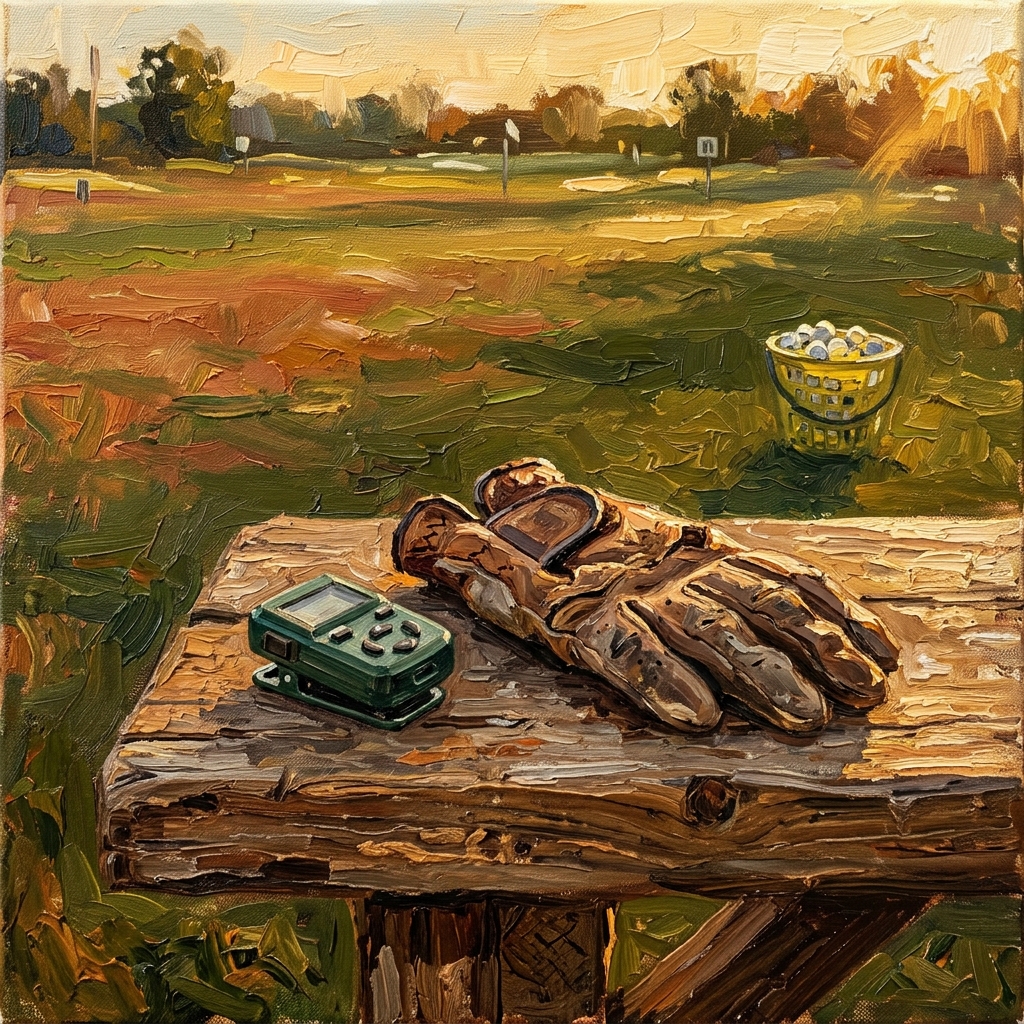
Thirty bucks bought me a rhythm. It did not buy me a diagnosis — those turned out to be two very different purchases.
The short answer: a tempo trainer teaches you the rhythm of a swing you already have — it will not tell you the swing itself is wrong. A single real lesson does the opposite: it diagnoses the actual flaw, but it can't install new rhythm into your hands the way weeks of repetition can. They're not really competing for the same job, and treating them like rivals is how I ended up owning both and needing them both.
I'm a weekend golfer who plays a bogey most Saturdays and has never once considered turning pro, which — per the whole point of Tested by a Bogey Golfer — is exactly who this test is for. Nobody here is chasing scratch. We're chasing the version of Saturday where the tee shot doesn't end the conversation.
Why I Clipped a Beeping Plastic Gadget to My Glove Before Ever Booking a Lesson
I'd had the same miss for two years. A quick, jabby transition at the top that turned a decent backswing into a weak slice about one drive in three — enough to be embarrassing, not enough to be a crisis. Dave has a theory about it every single round. None of his theories have worked.
The tempo trainer showed up in an Amazon "customers also bought" list next to a rangefinder I was already eyeing. Thirty dollars, a small plastic clip you attach to your glove or waistband, and a set rhythm — a click at the top of the backswing, a second click timed to impact — built around the classic three-to-one backswing-to-downswing tempo a lot of instruction is built on. No app, no subscription, no human being watching me hit a shank.
That last part mattered more than I want to admit. A $30 box doesn't judge you. It just beeps.
This isn't my first cheap gadget under the microscope, either. I've already run alignment sticks and a putting mirror through this same wringer, and watched a buddy swear by impact tape for a month before quietly admitting it just confirmed a problem he already knew he had. Some of these gadgets earn a permanent spot in the bag. Some are fifteen-dollar confirmations of something you already suspected. Going in, I genuinely didn't know which pile this one would land in.
So I clipped it on, went to the range on a Tuesday evening with nobody around, and started swinging to the click instead of my usual rushed panic-swing. First bucket: it felt like conducting an orchestra I didn't know how to conduct. By the third bucket, over two weeks, it started feeling less like homework and more like a habit — which, if you've read anything else in this training aids series, is usually the moment a cheap gadget either proves itself or quietly gets left in the garage.
So What Is a Tempo Trainer Actually Supposed to Do?
What does a golf tempo trainer actually do? It gives your swing an audible rhythm to match — usually a two-beat click built around a 3:1 backswing-to-downswing ratio — so your hands learn a consistent pace instead of rushing the transition under pressure.
Does that fix a slice? Sometimes, if the slice is caused by rushing. Not if it's caused by something else.
Why does rushing cause a slice in the first place? A jabby transition throws the club "over the top," steepening the swing path across the ball instead of through it. Slowing the transition down often — not always — shallows that path out on its own, no swing thought required.
That's the whole mechanism. It's a metronome for a motion, not a diagnostic tool. It has no idea what your grip looks like, whether your shoulders are aligned at the ball, or whether the miss is actually coming from somewhere else entirely. It just knows you're rushing, and it makes rushing audibly obvious.
Does it work the same on every club? Not close. It did the most work on the driver and long irons, where a full backswing gives rushing room to happen. On wedges and short chips, the swing's already so short that I barely noticed the click doing anything — there just isn't enough time between the top and impact for tempo to go sideways the same way.
Is it more useful for beginners or golfers who've been stuck at the same level for a while? In my experience, more useful for the stuck ones. A total beginner doesn't have an established rhythm to fix yet — they're still figuring out where the clubface is. A stuck bogey golfer usually has a very consistent rhythm that happens to be consistently wrong, which is exactly the kind of thing a click in your ear can interrupt.
A Month of Beeps vs. Forty-Five Minutes With an Actual Instructor
The tempo trainer: four weeks, roughly a dozen range sessions, zero human interaction, $30 total. Progress measured in feel, not footage.
The lesson: one Tuesday afternoon, forty-five minutes, one instructor, a phone camera propped on a tripod, $85. Progress measured in a specific sentence I still remember word for word.
I went into both expecting the same kind of result — "your swing gets better, generally" — and got two completely different kinds of information back. The trainer taught me a feeling. The lesson named a cause. Neither one replaced the other, which is not the tidy verdict I was hoping to write when I bought the gadget.
Here's the part nobody selling either product wants to say out loud: the trainer can only work on a motion you're already making. If the underlying move is broken, a tempo trainer will just teach you to make that broken move more consistently, on a nicer rhythm. That's improvement you can feel and measure absolutely nothing from — right up until a real set of eyes tells you what's actually happening.
What the Trainer Actually Changed (and What It Never Touched)
My miss went from roughly one bad drive in three to roughly one in five over the month. That's real — I noticed it on the course before I noticed it on the range, which is usually the tell that something's actually sticking rather than just working under ideal conditions.
What it never touched: the days it was windy, the days I was rushing between the parking lot and the first tee, and the exact mechanical reason the miss existed at all. The trainer fixed my rhythm on a swing that still had a flaw sitting underneath it. It just made the flaw show up less often.
I'm not totally sure why a month was the right amount of time and not, say, two weeks — my guess is it took that long for the click to stop being something I consciously followed and start being something my hands did on their own.
🔧 Getting the Most Out of a $30 Tempo Trainer
- ✅ Use it on full swings only for the first two weeks — it's built around a swing tempo, not a chipping stroke
- ⭐ Give it a full month before judging it — the first week just feels like following a metronome badly
- 🚫 Don't expect it to diagnose anything — it has no idea what your setup or path look like, only your timing
- 💡 Take it off for real rounds until the rhythm feels automatic on the range — beeping mid-backswing in front of strangers is its own kind of etiquette violation
What My Buddies Said When They Saw Me Beeping on the Range
Mike saw the clip on my glove before he heard it. "What is that, a pager?" Then it beeped mid-backswing and the whole cart went quiet for a second before somebody laughed.
The skeptical version of this question goes: aren't these things just gimmicks? Fair question, and the honest answer is some of them are. I don't think the trainer is one of them, but I understand exactly why it looks like one from the cart path.
Two things kept it from being a gimmick for me. First, it only ever claimed to do one job — set a rhythm — and it did that one job without drifting into vague promises about transforming my entire game overnight. Second, it worked differently on different clubs, which told me it was measuring something real. With the driver, the click exposed the rush immediately; with a wedge, I barely noticed it doing anything at all, because a shorter swing leaves less time to rush in the first place.
It also fell apart exactly where you'd expect a rhythm tool to fall apart: under pressure. Standing over a tee shot on a $5 Nassau front nine with the group watching, the click in my head disappeared the second the stakes went up. That's not really a flaw in the trainer — that's just what pressure does to rhythm, gadget or no gadget. A month of range sessions built the habit; it took actual rounds, with actual money on the line, to find out how much of that habit survived contact with a real Saturday.
Mike's take, once he tried a bucket of balls with it himself: "It's annoying and it works, which is the worst combination." I can't really argue with that.
The Lesson That Told Me What the Trainer Couldn't
Booking it felt bigger than it should have. I put it off for three weeks after the trainer arrived, mostly because a lesson means someone watches you swing badly on purpose and then tells you why, out loud, to your face.
The instructor filmed six swings on his phone before saying a word. Then he played the video back at half speed and pointed at a single frame — the top of my backswing — and said my hips hadn't started turning yet when my hands already had. Arms starting the downswing before the lower body does, textbook over-the-top, textbook slice. He never mentioned tempo once. He didn't need to.
That's the sentence I still remember: "Your rhythm's actually not bad. Your sequence is backwards." A month of beeping had built decent rhythm around a movement pattern that was firing in the wrong order — which meant the trainer and I had spent four weeks getting more consistent at doing the wrong thing slightly less wrong.
Two rounds after the lesson, with his fix — a deliberate half-beat to let my hips start the downswing before my hands do — layered on top of the rhythm the trainer had already built, my miss dropped again, down to roughly one drive in seven. That's the two of them working together, not one replacing the other.
This wasn't my first time wrestling with whether lessons are worth it for someone who'll never play this game for a living. I've taken one lesson so you don't have to before, gone deep on whether lessons are worth it for a bogey golfer specifically, and even asked ten other weekend golfers whether theirs actually stuck. The answer keeps landing the same way: one good lesson beats a season of guessing, but only if you practice the fix afterward instead of nodding along and going back to the swing you walked in with.
If $85 feels steep for forty-five minutes, I understand — that's a real number against a real Saturday budget, and it deserves to be weighed against everything else competing for that money. But measured against how many range buckets I'd already burned chasing this fix on my own, one lesson that actually named the problem was the cheapest fix I bought all year.
That stings a little to write, but it's the honest version. I improve my own experience out here one Saturday at a time, and sometimes the honest improvement is admitting the cheap fix only got me halfway.
So Which One Actually Fixes Your Tempo?
Does a tempo trainer actually fix bad tempo, or just mask a different problem? It genuinely fixes tempo — the timing of your transition — but it can't tell you whether the motion underneath that timing is sound.
Why does that distinction matter? Because "my tempo's off" and "my sequence is off" produce the same symptom — a rushed, over-the-top move — but only one of them gets fixed by slowing down.
How do you know which one you actually have? If your miss gets noticeably better the moment you consciously slow down and it comes right back the second you're not thinking about it, that's tempo. If slowing down just gives you more time to make the same wrong move more deliberately, that's sequence — and no amount of beeping fixes sequence.
My miss was genuinely both, which is probably the most common answer and the least satisfying one. The trainer chipped away at the tempo half. The lesson found the sequence half sitting underneath it.
Cost, Speed, and What You're Actually Buying
Thirty dollars against eighty-five isn't really the comparison people think they're making when they ask this question. You're not choosing between a cheap fix and an expensive one — you're choosing between a rhythm tool and a diagnosis, and one of those is a supplement while the other is closer to a prerequisite.
If your miss has been the same one for years — like mine had — a lesson finds the actual cause in forty-five minutes flat. A tempo trainer, on its own, might spend months quietly reinforcing that same cause with better timing.
Stretch the math across a season and the picture shifts again. The trainer is a one-time $30 purchase — clip it on in April, it's still working in October, no repeat cost. Lessons don't work that way. If your instructor wants you back for three or four follow-ups to lock in a swing change, that's $250–$340 by the time the season's over, not $85. Neither number is wrong to spend. They're just answering different questions — "can I afford to build a habit" versus "can I afford to fix a cause" — and most of us have a clearer budget answer for the first one than the second.
Who Should Buy the Trainer, Who Should Book the Lesson
Buy the trainer if your miss is new, inconsistent, or shows up mostly under pressure — first tee nerves, a big money hole, the group behind you watching. That's a rhythm problem, and $30 solves rhythm problems well.
Book the lesson first if your miss has a name in your group already. If Mike can predict your slice before you swing, that's not a timing issue anymore — that's a pattern, and patterns need a diagnosis before they need a metronome.
There's a third case worth naming honestly: if you already know exactly what's wrong — a buddy's told you, or a previous lesson already named it, or you've seen it on video yourself — skip the trainer and go straight to fixing that specific thing. A tempo trainer is a good tool for an unknown or a pressure-only miss. It's the wrong tool for a known, named flaw you're just avoiding dealing with because a metronome is less confrontational than an instructor.
Do both, in that order, if you can afford it. That's what I ended up doing, and it's the only version of this test where I didn't feel like I'd wasted either $30 or $85. I'm not sure that's the exciting verdict a "versus" headline promises, but it's the true one — and around here, the honest answer earns more respect at the 19th hole than the tidy one ever does. It's the same reason a few of us still trade notes on whatever viral swing tip is making the rounds before anyone actually pays for real instruction.
Where This Fits Into the Bigger Spending Question
Every dollar spent chasing a better Saturday competes with every other dollar in the bag. I've made basically the same argument about what clubs you actually need — most of us are carrying gear that solves problems we don't actually have, while the one problem we do have sits untouched for years.
A $30 tempo trainer and an $85 lesson both pass that test easily. Neither one is solving an imaginary problem. The trainer solves a timing issue you can feel by Thursday. The lesson solves whatever's been quietly costing you strokes since before you can remember starting.
Where the test gets harder is everything after that — the $300 driver, the $150 rangefinder, the third dozen of premium balls this season. Ask the same question of every purchase: does this fix something specific, or does it just feel like progress? The trainer passed that test for me. Plenty of things sitting in my bag right now wouldn't.
What $30 and One Hour Actually Bought Me
📋 What Actually Happened When I Tested a Tempo Trainer Against a Real Lesson
- 😤 Before: A two-year-old slice, roughly one bad drive in three, and a running joke in my group about which trees I'd find it in
- 💡 The experiment: Four weeks with a $30 clip-on tempo trainer, then one 45-minute lesson to see what it missed
- 🎯 What changed: The miss dropped to about one in five with the trainer alone — then the lesson found the actual sequencing flaw sitting underneath it
- 🏌️ The verdict: Buy the trainer for the habit, book the lesson for the truth — and don't expect either one to do the other's job
I'm a bogey golfer who improved his own Saturday by thirty dollars and one honest conversation, not by getting good — which is a distinction worth holding onto the next time some gadget promises to fix your golf swing overnight. Nobody at the 19th hole is impressed by a swing thought. They're impressed by the drive that actually finds the fairway, and I earned the right to talk about that one specific drive because I finally understand why it happens now.
🏌️ Got a Golf Story?
Share it with us. Every story we publish earns the author a free copy of The Weekend Golfer's Social Playbook — our three-step system for finding your people, running trips that actually come together, and earning the right to brag at the 19th hole.
Or join the Golfeasers — free weekly content for people like us.
More Cheap Gadgets and Honest Verdicts Before Your Next Round
- What a Real 20-Handicap's Stats Actually Look Like — see whether your own numbers match the miss this trainer was chasing
- I Stopped Buying Premium Balls for 6 Months — another $30-ish question about where the money actually helps
- I Used a Rangefinder for the First Time as a Bogey Golfer — the gear-versus-skill question from a different angle
- What I've Tested, Ranked — every tip and gadget I've put through this pillar, ranked by what actually stuck
Tempo Trainer Questions Every Bogey Golfer Asks
Does a $30 tempo trainer actually work for a high handicapper? Yes, for what it's built to do — it noticeably improved my transition timing within about three weeks of regular use. It will not diagnose a mechanical flaw underneath that timing, which is the part a lesson is built for.
Is a tempo trainer a good substitute for lessons? Not a substitute — closer to a supplement. It works well on the timing of a swing you already have, but it has no way of evaluating your setup, path, or sequencing, which is where most persistent misses actually live.
How long does the effect of a tempo trainer last after you stop using it? In my case, the improved feel started fading within a couple of weeks of putting it in the bag drawer, which tracks with most muscle-memory drills — the rhythm has to be maintained, not just installed once.
Should I buy the trainer before or after a lesson? If your miss is new or only shows up under pressure, try the trainer first — it's the cheaper diagnostic. If the same miss has survived more than one season, book the lesson first; you'll spend the $30 more effectively once you know what you're actually training.
Is one lesson really enough to fix anything? One lesson won't rebuild your swing, but it can absolutely name the one thing that's costing you the most strokes — which is what happened here. The follow-through on practicing that fix is still on you.
Note: Testing Training Aids (the T3 hub this article sits under) should be built before or alongside this page — it is the structural parent in the cluster and doesn't have a live page yet.

Johnny is a 25-year weekend golfer who's double-booked tee times, forgotten his clubs an hour from the course, and made pretty much every other trip-planning mistake there is — so you don't have to. Guided by The Golfeaser Manifesto, he started Golfeaser.com to prove that weekend golfers are a special, funnier breed who improve the experience, not just the scorecard. He's also the guy behind The Weekend Golfer's Social Playbook — a three-step system for finding your people, running trips that actually come together, and earning the right to brag at the 19th hole.
