- Home
- Tested by a Bogey Golfer
- Golf Gifts
- For the Retirement Round
The Retirement Gift That Doesn't Insult a Guy Who Can Finally Play Every Day
Mike put his phone on the cart seat between us on 14 and said it out loud for the first time: "Friday's my last day." Thirty-one years, same company, and just like that he had a Tuesday tee time waiting for him every week for the rest of his life. Nobody in the group knew what to get him. A mug felt like an insult.
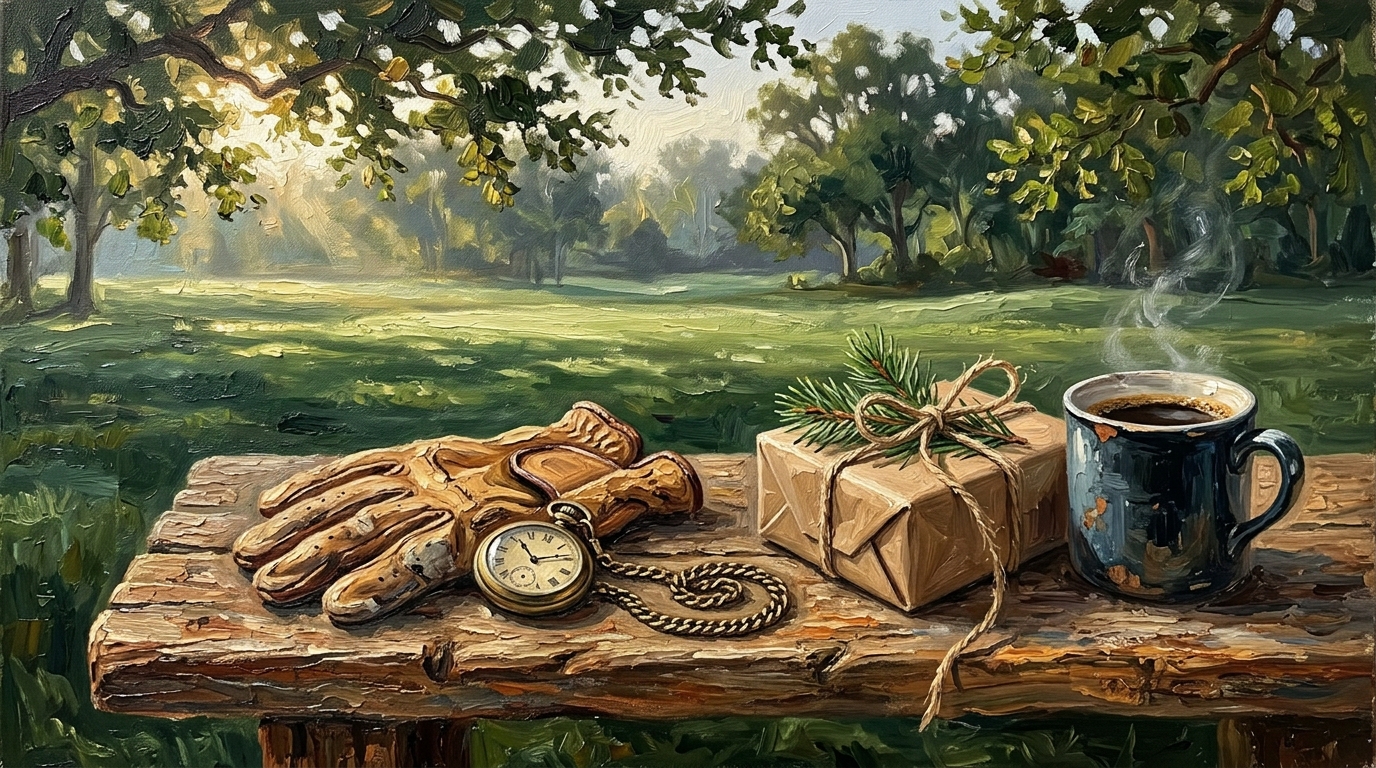
The watch in that photo isn't for time anymore — it just tells him he doesn't have to check it.
The best golf retirement gift is something that matches how much he's actually going to play now — not a novelty item that sits in a drawer. Think gear that survives daily rounds, a group-funded splurge nobody could justify solo, or simply more time on the course with the people who are giving it. Skip the "World's Okayest Golfer" mug.
Here's the thing nobody talks about: retirement doesn't turn a guy into a different golfer. He's still the same weekend golfer he's always been — he just stopped being a weekend golfer and became, improbably, a Tuesday-Wednesday-Friday golfer too. That identity doesn't need fixing. It needs equipping.
This isn't a list of golf gadgets ranked by price. It's what actually gets used by a guy who suddenly has forty extra hours a week and one fewer reason to leave the house. Some of what's below costs $12. One of them should probably come from the whole group, split enough ways that nobody has to explain the number to their spouse alone. This guide's part of Golfeaser's ongoing series of testing what actually helps the average golfer — the full Tested by a Bogey Golfer hub has the rest of it.
What Does a Guy Who's About to Play Golf Every Day Actually Need?
Does he need new clubs? Almost never. A guy who's been playing for three decades already has clubs he trusts — buying him a new driver assumes his current one is the problem, and it usually isn't.
What he needs is gear built for volume, not novelty. The stuff you use twice a week survives fine when it's a little worn. The stuff he's about to use four or five times a week needs to actually hold up: a bag that won't blow a wheel by August, a rangefinder battery that doesn't die mid-round on a Tuesday when there's nobody around to borrow one from.
Comfort matters more than it used to, too. He's not walking 18 to impress a client anymore — he's walking 18 because he can, and his feet will let him know by hole 12 if the shoes weren't built for four rounds a week instead of one.
One guy in our group got a rangefinder with a paid subscription for slope data the week he retired — great idea, wrong execution. He canceled the subscription in April because he'd rather guess than pay $60 a year for a number he could estimate anyway. The gear that gets used is the gear that doesn't ask anything of him after the wrapping paper's gone.
The other thing he needs, and it costs nothing: more invitations. A gift that gets him on the course with people beats almost anything wrapped in paper. Guys who've actually made this jump talk about the same thing — see what changes, and what doesn't, when you're retiring and playing golf full time.
Which is really the whole test for anything on this list: does it need him to do something extra to keep using it, or does it just show up and work the next time he tees off.
🎯 What He Actually Needs Now
- ⭐ More rounds means his gear needs to survive daily use, not weekend-only wear
- ⛳ Comfort over flash — he's not trying to impress anyone at the client scramble anymore
- 💡 Time is the real gift now, so anything that saves him prep on a Tuesday morning tee time wins
- 🔧 Skip anything that requires a manual longer than the receipt
The Group Gift Everyone Can Actually Afford
Six guys, one retirement, and the group chat immediately fractures into two camps: the "let's all go in on something real" camp and the "I'm not spending $80 on a golf umbrella" camp. Both camps are right, which is the annoying part.
We settled it for Mike by doing math nobody enjoys — $25 a head from eight of us got us a decent GPS watch, the kind he'd never buy for himself because $200 felt indulgent for something his phone already sort of does. Split eight ways, it stopped being indulgent and just became a gift.
Group gifts work because they solve the guilt problem. A guy who's spent three decades being responsible for a mortgage and two kids' tuition has a hard time buying himself something nice even when he's earned forty extra hours a week to enjoy it. Somebody else has to give him permission.
If your group's landing on something in the $150–$300 range, browse the broader list of golf gifts for men who play regularly — most of what lands well for a regular player lands even better for a guy about to become a daily one, and the golf gifts hub has the full range if this list doesn't have exactly what fits your guy.
Give the group a real deadline — "by the 15th or we're doing gift cards" — because eight guys with good intentions and no deadline will still be discussing it in March. Whoever proposes it should also be the one who orders it; consensus by committee kills momentum fast.
Chipping in on something like this is its own small way of making the foursome better — not because of what it costs, but because it's eight guys agreeing this friendship is worth showing up for beyond just Saturday.
Not every gift needs eight signatures on a card, though. Some of the best ones cost less than a sleeve of balls.
Under $50: Gifts That Don't Feel Like an Afterthought
Under $50 is where most solo gift-givers actually land, and it's a wider lane than it sounds.
A quality glove three-pack beats a novelty item every time — he'll actually use every one of them, and gloves wear out faster once he's playing daily instead of weekly. It's boring. It's also correct.
A rangefinder strap or a real divot tool sits in the middle — not exciting to unwrap, genuinely useful by the second round. Compare that to a golf-themed coffee mug: funny for about a week, then it's just a mug with a golf ball on it sitting in the same cabinet as every other mug.
If you want something with a little more personality without spending more, look at the stocking-stuffer-style options — small, practical, and built for someone who's actually out there several times a week rather than once. The pick, if you're choosing one: the glove three-pack or the divot tool. Both get used on round one and round fifty.
For the fuller range in this price band, the under-$50 golf gifts list has more options sorted by what actually gets used versus what looks good in a photo, and the golf stocking stuffer roundup works even outside the holidays for small, practical add-ons.
None of this needs to be clever. The guy who's about to play 150 rounds a year doesn't need a gimmick — he needs the boring stuff replaced before it wears out on its own.
The One Splurge Worth Pooling Money For
Our guy Dave got fitted for a new driver the month he retired, paid for by eleven of us at $40 a head. He'd been playing the same driver for nine years — the kind of guy who genuinely didn't know his swing speed had changed until someone finally put him on a launch monitor.
Forty minutes and a spreadsheet full of numbers later, he found out he'd been playing a shaft too stiff for him since roughly 2019. The new setup added about fifteen yards off the tee, which sounds like a stat somebody made up, except he brought it up unprompted for the next four Saturdays.
A splurge only works as a gift when it's something he'd never spend on himself. A proper club fitting qualifies. So does a rangefinder with slope and a real optical zoom instead of the budget version. So does a season of cart fees at his home course, quietly paid for in advance so he stops noticing the bill.
If he's at the stage in life where distance off the tee and joint-friendly gear both matter, the senior golf hub has good starting points, and the senior driver roundup is worth a look before anyone spends real money on a fitting — better to know what's actually worth testing than to guess.
The math on a group splurge is simple even if nobody wants to do it out loud: $400 split twelve ways is $33 a head, less than most guys spend on a single round with cart and beer. Set the number early, collect it fast, and don't let the gift get watered down into something smaller because collecting money from twelve adults is genuinely annoying. It always is. Do it anyway.
Not every gift on this list needs a spreadsheet, though — some of the ones that land hardest don't cost anything close to what a fitting does.
If your group's still stuck between "let's go big" and "let's not overthink this," here's the two-question version of the decision nobody wants to have over text for three weeks.
Personal, Not Cheesy: Sentimental Gifts That Land
Sentimental doesn't have to mean corny. A photo book of every group trip since 2014 beats a framed inspirational quote about golf and life. A round played at the course where he first learned, with the same three guys who taught him, beats almost any physical object on this list.
Engraving works when it's specific — his actual handicap the year he retired, a real date, a real course name. Engraving doesn't work when it's generic ("World's Greatest Golfer") because he's already owned three mugs that say some version of that.
If he genuinely has every piece of gear already, skip gear entirely and look at what actually works for the guy who's already got everything — the answer is usually an experience, not another object.
I'm not totally sure why this works better than it should, but a $15 photo book gets talked about more at the 19th hole than the $300 gift did the year before. Maybe it's just that everyone in the photo has to say something about it.
Small and specific reliably beats big and generic. That's true of gifts, and it's true of most things people say to each other at retirement parties.
What Not to Get Him (Even If Amazon Suggests It)
Some gifts are so common they've stopped meaning anything. A few are worth naming outright, because somebody in your group chat is going to suggest at least one of them.
🚫 Skip These
- 🚫 Anything that says "World's Okayest Golfer" — he's heard every version already
- 🚫 A one-size hat that doesn't fit his actual head
- 🚫 Golf lessons he didn't ask for — it implies thirty years of playing needs correcting
- 🚫 A gift that requires him to learn an app before he can use it
A round of unsolicited golf lessons is the worst offender on that list — it implies he needs fixing right as he's earned the right to just enjoy the game, badly, on his own schedule. Save the lessons for someone who's actually asked for them.
The Father's Day-style novelty mugs and shirts have their place — they're just not this occasion. Save those for the actual Father's Day gift guide; a retirement deserves something that acknowledges what's genuinely changing, not a generic dad joke on a t-shirt.
If the group genuinely wants to do a joke gift alongside the real one, the funny golf gifts list has options that land without being the only thing he unwraps. One joke gift is fine. Two starts to feel like nobody could agree on something real, and he'll notice.
Giving It Right: The Actual Retirement Round
We didn't give Dave his driver in a parking lot. We gave it to him on the 18th tee of his last Friday before his last day of work, in front of the whole group, with his wife walking the back nine just to watch.
Jim asked me what changed about doing it that way instead of just handing it over at the clubhouse afterward. Something happened. Something changed — the gift stopped being a transaction and became part of the story of that specific round, the one he'll actually tell at the 19th hole for years instead of just mentioning he "got some new clubs."
Used to be Dave played it safe off every tee, laying up short of trouble even when he had the shot. That afternoon, with a new driver in his hands and eleven guys watching, he pulled it back and went straight at the corner he'd avoided for a decade. It didn't find the fairway. Nobody cared — the swing was the gift working exactly as intended.
Every guy in that group has spent years improving his own experience on a Saturday morning one small decision at a time — better tee times, better games, better company. Handing Dave something on the course he'd chosen, surrounded by the group he'd built, was just that same instinct pointed at somebody else for once.
If you're planning something similar, treat the round itself as half the present. Pick a course he actually loves, not the closest one. Invite the people who've earned a seat in the story, even if that stretches the group past its usual four. And say something real when you hand it over — not a speech, just the truth: that the round is what everybody actually showed up for, and the gift is just what he gets to remember it by.
Before You Hit "Buy"
Every gift on this list passes the same test: does it match how he's actually going to play now, not how good it looks wrapped up on the table. Group-fund the big stuff. Keep the small stuff boring and useful. Skip anything that requires him to learn something new before he can use it, and give it to him somewhere on the course if you can manage it — the 18th tee does more work than any card.
⛳ Before You Buy
- ⭐ Match the gift to how often he'll actually play, not how good a photo it makes
- 💰 Group-fund anything over $100 — nobody needs to explain a big number to a spouse alone
- ✅ A handwritten card beats a bigger box nobody signed
- 🎯 Give it on the course, not at a dinner — the 18th green is the room this speech belongs in
Retirement Gift Questions Every Golf Group Asks
What's a good group gift for a retiring golfer? Something he wouldn't buy himself even though he could technically afford it — a full club fitting, a premium rangefinder, or a season of prepaid cart fees. Split among six to twelve people, $30–$50 a head covers most of these comfortably.
How much should a golf retirement gift cost? Solo gifts land best in the $30–$100 range; anything bigger works better as a group contribution so no single person has to justify the number to a spouse. There's no rule that says bigger is better — a $15 photo book of trip photos regularly outlasts a $200 gadget in what actually gets talked about afterward.
Is a golf trip a good retirement gift? It can be one of the best, but treat it as a group project with a real budget and a real date, not an open-ended promise that never gets booked. If the group's already planning something, folding the retirement into an existing trip beats trying to organize a brand-new one from scratch.
What if he already has good clubs and doesn't need equipment? Go sentimental instead of functional — a photo book, an engraved item tied to a specific round, or simply organizing more tee times with the people he'd actually want to play with. The gift that gets remembered isn't always the one that got used the most.
🏌️ Got a Golf Story?
Share it with us. Every story we publish earns the author a free copy of The Weekend Golfer's Social Playbook — our three-step system for finding your people, running trips that actually come together, and earning the right to brag at the 19th hole.
Or join the Golfeasers — free weekly content for people like us.
More Gift Ideas Before Your Next Trip to the Pro Shop
Fellow Golfeasers going through this same handoff — new schedule, new season of life — might also want:
- Empty-Nester Golf: When You Suddenly Have All the Time You Used to Want
- Turning 50 and Renegotiating What Your Golf Game Gets to Be
- Senior Golf Equipment: What Actually Helps (Not Hype)
- Golf Gifts Under $30 That Don't Feel Like a Consolation Prize

Johnny is a 25-year weekend golfer who's double-booked tee times, forgotten his clubs an hour from the course, and made pretty much every other trip-planning mistake there is — so you don't have to. Guided by The Golfeaser Manifesto, he started Golfeaser.com to prove that weekend golfers are a special, funnier breed who improve the experience, not just the scorecard. He's also the guy behind The Weekend Golfer's Social Playbook — a three-step system for finding your people, running trips that actually come together, and earning the right to brag at the 19th hole.
