- Home
- Tested by a Bogey Golfer
- Golf Gifts
- Budget Gifts (Under $30)
The Under-$30 Golf Gifts That Actually Get Used (Not Regifted at the Office Party)
"What do you even get a guy who plays every Saturday and already owns everything he needs?" Dave asked me this in the parking lot at Thanksgiving, phone open to a golf gift roundup with fourteen items over $80 on it. He had a $30 budget and a brother-in-law who'd politely re-gift anything that wasn't exactly right.
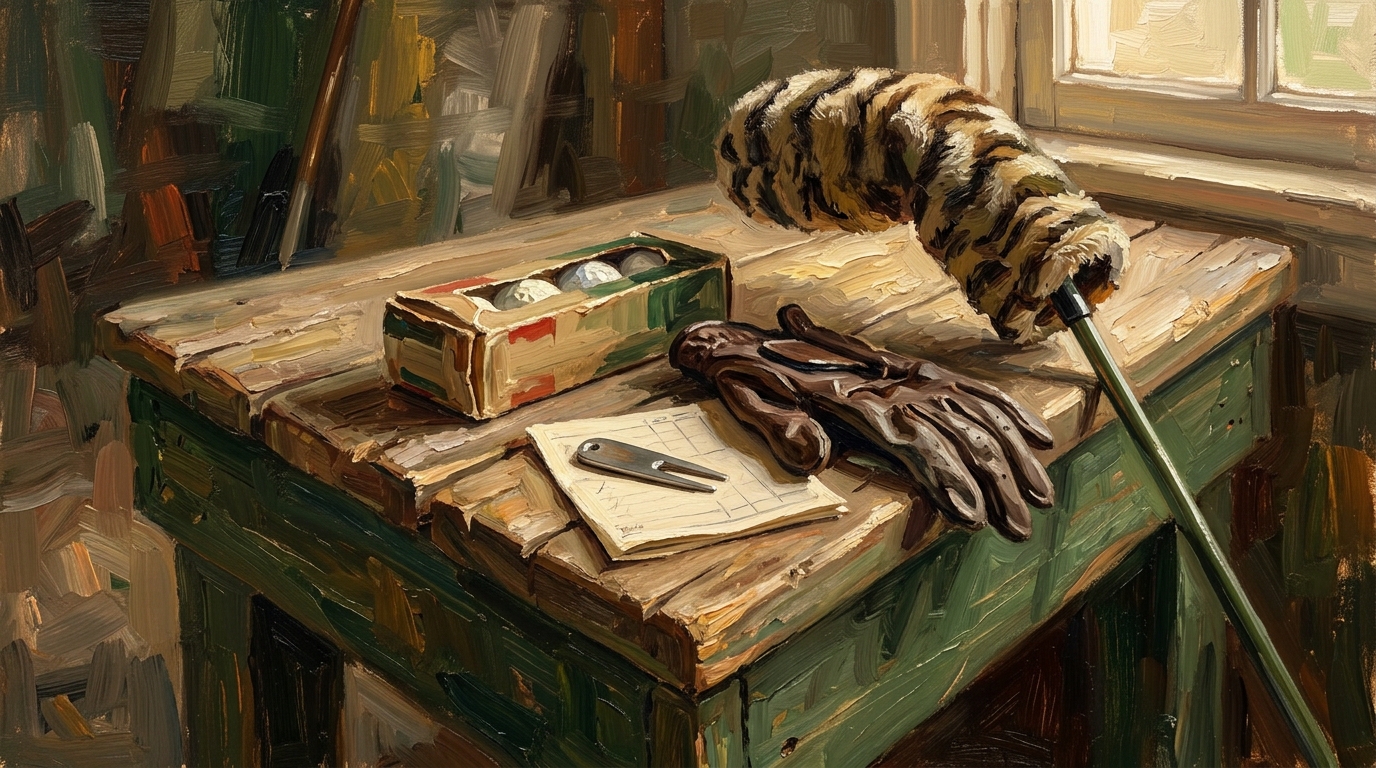
Mike's had that $12 divot tool in his bag for four years — outlasted two drivers.
Under $30, the golf gift that works is almost never the one that looks most impressive on a store shelf. It's a consumable he'll actually use up and need more of, something matched to what he already carries, or something small and specific enough that it proves you were paying attention. Skip the gadgets and the logo-branded filler — they're the two fastest ways to a drawer nobody opens again.
That's the part nobody puts in the roundup articles. They're built to fill fourteen slots, not to answer the actual question, which is: what does a guy who already has a bag full of stuff genuinely want more of? I've been the guy unwrapping the questionable gifts and the guy quietly reading the room to buy better ones, and the gap between a $30 gift that lands and one that gets regifted has almost nothing to do with price and everything to do with whether whoever bought it knew anything about how he actually plays.
I improve my own experience on a Saturday same as anyone, but buying for someone else in that same twenty-five-dollar range means paying attention to their experience instead — what they reach for, what they've complained about running out of, what's been sitting in the bottom of the bag since last spring. That's the whole skill here. It isn't expensive. It's noticing.
Why Buying Golf Gifts Under $30 Feels Impossible
Every golf gift guide online is built the same way: pull fifteen products in a price bracket, write two sentences about each, move on. Nobody buying a gift for an actual person finds that useful, because the list doesn't know your guy. It doesn't know he already owns four divot tools, or that he switched ball brands last spring and hasn't told anyone, or that his glove hand runs a half-size bigger than you'd guess.
I learned this the expensive way — well, the cheap way, technically, since the gift itself only cost about $22. My buddy Dave gave me a $9 ball retriever two Christmases ago as a joke gift, and it's outlasted three putters in my bag since. He didn't research anything. He just remembered I'd complained twice that season about wading into a pond after a Titleist I couldn't afford to lose. That's the whole formula. A gift under $30 doesn't need to be impressive. It needs to solve something the guy has already told you, out loud, more than once.
The instinct under pressure is to go bigger or go novelty — grab the golf-shaped flask, the "world's okayest golfer" mug, something that reads as golf even if it has nothing to do with how the guy actually plays. Those items exist because they're easy to buy, not because anyone wants them. A $28 item that solves an actual annoyance beats a $28 item that just looks like a golf gift, every single time.
Here's the reframe that makes the whole budget easier: under $30 isn't a constraint you're working around. It's a category with its own rules, and once you know them, this stops being a stressful last-minute purchase and starts being one of the easier gifts on your list.
This list only includes what actually holds up once it leaves the store, same standard we hold everything to over in Tested by a Bogey Golfer — no product that looked good in a photo and then sat unused. If $30 turns out not to be your ceiling this year, the full golf gifts hub runs the same filter across every price range and occasion.
What Actually Works Under $30
What's the single safest golf gift under $30? A quality dozen of the exact ball he already plays, in his exact model — not a "nice" ball you'd pick, but his ball. It's a consumable he'll use inside of two rounds, it never gets re-gifted, and it signals you noticed something specific about his game instead of grabbing whatever was at the register.
Why does the exact-ball approach work better than almost anything else in this price range? Because it removes every variable that makes a gift risky. Wrong size doesn't apply. Wrong taste doesn't apply. "He probably already has one" doesn't apply, because balls get lost, and a golfer who plays weekly loses more of them than he'll ever admit out loud. You're not guessing what he wants — you're just restocking something he's already told you, through his bag, that he wants more of.
The best $14 I ever spent on a friend was a sleeve of the exact ball he plays, bought after overhearing him mutter about running low at the turn. Not a "premium" upgrade he didn't ask for. The one he actually buys for himself. He mentioned it three separate times that round, which is two more mentions than any $60 item I've ever given anyone.
💰 What Earns Its $30 (and What Doesn't)
- ✅ His exact ball, a full dozen — the single safest pick in this whole price range
- ⭐ A leather-feel glove in his actual size, replacing the one he's been complaining is worn through
- 🔧 A cheap, genuinely useful tool — divot repair, brush, or ball marker — that solves something small he's mentioned
- 🚫 Anything with "world's okayest" or a swing joke printed on it — funny once, then it's drawer clutter
- 🚫 A gadget promising to fix his swing — nobody wants a training aid disguised as a present
There's a second category that works almost as well: a small, specific tool tied to something he's mentioned needing. A pro-grade divot tool for the guy who's been borrowing yours all season. A brush for the guy whose grooves are visibly caked in mud every third hole. These land because they're targeted, not because they're clever. The targeting is the gift.
Picking the Right $30 Gift, Fast
Standing in a pro shop with twelve minutes before you need to leave for the round is not the moment to overthink this. The flowchart below is the same mental math I run through every time — three questions, and you're out the door with something that'll actually get used.
The $30 Gifts That Miss Every Time
Every $30 gift that fails does it the same way: it's built for "a golfer" instead of the guy in front of you. Giving a low-single-digit swinger a beginner's swing-plane trainer is kinda like handing a chef a microwave meal kit — technically food, but insulting. He already knows how to swing. He doesn't need a $19 gadget implying otherwise.
The gadget category is the biggest trap in this whole price range, and it's worth naming specifically because it's the one that looks the most like a good idea in the store. Swing-tempo beepers, alignment lasers, putting mats with built-in scoring — they photograph well, they read as thoughtful, and they almost never survive past a second use. I got an alignment gadget for my 50th that's touched grass exactly twice. It's not that the gadget is bad. It's that a gift implying "here's how you fix your game" lands differently than a gift that says "here's something for the game you're already playing."
The other consistent miss is the branded-logo item — a $24 mug, towel, or headcover with a joke about handicaps or bad shots printed on it. These get a genuine laugh in the moment and then quietly disappear, because a joke gift has a shelf life of about one conversation. Compare that to a consumable or a matched-to-his-gear gift, which gets used every single round until it runs out. One is a moment. The other is a habit. At $30, you want the habit.
If you're choosing between the two categories side by side — a clever novelty item versus a boring, exactly-right consumable — take boring every time. The novelty gift gets a bigger reaction when he opens it. The consumable gets used on the next four rounds. Only one of those is still doing its job by Easter.
This gets harder, not easier, when he's the guy who genuinely seems to already own everything — and it's worth reading how that specific problem gets solved before you improvise: Best Golf Gifts for Men Who Have Everything covers the exact logic for that guy at a slightly bigger budget, and most of it scales down cleanly to $30 if you know his gear well enough.
Matching the Gift to the Occasion
Stocking stuffer or Secret Santa exchange? Keep it under $15 and let it be a little silly — a novelty ball marker, a mini bag repair kit, a set of colored tees. This is the one context where the rules above flip: low stakes, low commitment, funny is fine because nobody expects it to be their main gift. There's a whole roundup built specifically for this range — Golf Stocking Stuffers That Won't End Up in a Drawer — if you're filling more than one stocking.
Buying for the guy who's hosting you as a guest? This is where matching-his-gear thinking matters most, because a thank-you gift for a host reads as either generic or genuinely considered, with nothing in between. Used to grab whatever golf-shaped thing was at the register on my way to a guest round. After watching a host unwrap yet another cheap tee gadget with a polite smile that didn't reach his eyes, I started asking the pro shop guy what actually moves off the shelf at that specific course. Now I bring the same $18 divot tool every time, and it's the only thing anyone's ever mentioned twice.
Father's Day, birthday, or "just because" for a regular playing partner? This is where you have the most room to personalize — initials on a ball marker, his home course's name on a headcover, a glove in the exact model he's been putting off replacing. I'm not totally sure why, but a gift that's engraved with initials reads as thoughtful even at $22, while the same tool blank reads as an afterthought. If Father's Day specifically is the occasion, Father's Day Golf Gifts runs through the personalization angle in more depth than a budget list can.
Retirement round or a milestone you want to mark without spending big? A $30 gift can't carry that kind of weight on its own — pair a small, well-matched item with something personal, like a card that names an actual round you two played together. The gift signals thought. The specific memory is what actually lands. For the retirement occasion specifically, Golf Gifts for the Retirement Round covers how to scale that pairing up if you're chipping in with a group instead of buying solo.
If you're shopping across a wider budget window than exactly $30 — a bigger occasion, or a group gift where everyone's chipping in — the same logic scales up cleanly. Worth a look before you finalize anything: Golf Gifts Under $100 That Don't Look Like a Compromise and Golf Gifts Under $50 That Your Buddy Will Actually Use both run the identical matched-to-the-guy filter, just with more room to work with.
The One Move That Beats Every $30 Gift
Wrap it badly. Genuinely — a $30 golf gift handed over in a gas station bag with a scrawled note beats the same item in a gift box with a printed card, almost every time, because the bad wrapping signals you grabbed it specifically and recently, not that you ordered something generic in bulk back in October.
Presentation past that point stops mattering. What matters is timing it to something real — handing it over before a round instead of mailing it, or bringing it up naturally ("saw this and thought of you losing three balls in the water on 14 last month") instead of just handing it over silently. The gift is $30. The moment around it is free, and it's doing most of the actual work.
🎯 Getting a $30 Golf Gift Right, In Order
- ⭐ Start with his exact gear — ball model, glove size, whatever he's already complained about running low on
- ✅ Favor consumables over gadgets — anything he'll use up beats anything that promises to fix his swing
- 💡 Save the novelty items for stocking stuffers and grab bags, where low stakes make silly the right call
- 🚫 Skip logo-joke merchandise — one laugh, then a drawer, every time
- ⛳ Hand it over in person, tied to something specific, instead of mailing it in a gift box
There's a version of this that impresses your buddies without spending real money, and that's most of what a good $30 gift actually is — proof you were listening on the last four rounds, not proof you can spend. It also makes you the guy who shows up with the right small thing more often than not, which does more for a foursome over a season than anyone's expensive present ever has.
If the guy you're buying for is more into building out his own kit than receiving gifts from other people, it's worth knowing what a genuinely useful minimalist bag looks like before you improvise something off-list — What Clubs Do You Actually Need? The Minimalist Bogey Bag covers exactly that, and it'll save you from buying him a gadget for a slot in his bag he's deliberately kept empty.
Two more genuinely useful picks under $30, if he's the type who likes tinkering between rounds rather than just playing them: a set of alignment sticks, which are one of the few training aids in this price range that actually survive past week one, and a roll of impact tape, which tells him something true about his swing for about the price of a sleeve of balls. Both are the rare gadget-adjacent gifts that dodge the "implying he needs fixing" problem, because they're diagnostic tools he can use on his own terms, not a device claiming to fix him.
Under $30 Gifts That Earn Their Spot
🏌️ The Under-$30 Gifts Worth Buying
- ⭐ His exact ball model, a full dozen — the single safest gift in this entire price range
- ✅ A replacement glove in his real size, especially if he's mentioned his current one wearing through
- 🔧 Alignment sticks or impact tape — diagnostic, not corrective, and genuinely gets used
- 💡 A well-matched headcover or divot tool tied to something specific about his game or his home course
- 🚫 Anything joke-branded or promising to fix his swing — funny once, forgotten by spring
I make my foursome better by showing up prepared, and it turns out that principle covers gift-giving just as well as it covers pace of play. A $30 gift that's actually right does more for the friendship than a $60 gift that's generic, because the right gift is a small piece of evidence that you were paying attention — and paying attention is the whole currency of a group that's been playing together long enough to have inside jokes and running bets. You're always just one round away from the next chance to get it right, so if last year's gift missed, this year's is an easy fix, not a lost cause.
🏌️ Got a Golf Story?
Share it with us. Every story we publish earns the author a free copy of The Weekend Golfer's Social Playbook — our three-step system for finding your people, running trips that actually come together, and earning the right to brag at the 19th hole.
Or join the Golfeasers — free weekly content for people like us.
What Weekend Golfers Actually Ask About Budget Golf Gifts
Is a $30 golf gift too cheap for a close friend? No — price and thoughtfulness aren't the same thing, and a well-matched $30 gift regularly outperforms a generic $75 one. What reads as cheap isn't the dollar amount, it's a gift that shows no evidence anyone thought about the actual person receiving it.
What's the single best golf gift under $30 if I don't know his exact gear? A dozen premium balls in a widely-played model, or a solid divot tool. Both dodge the sizing and preference problems that sink most guesses, and both get used almost immediately.
Should I avoid gadgets entirely under $30? Not entirely — diagnostic tools like alignment sticks or impact tape work because they inform rather than correct. The gadgets to avoid are the ones implying his swing needs fixing, like tempo trainers or plane-correction gadgets he didn't ask for.
What if I only have $15 to spend, not $30? Everything in the stocking-stuffer category still applies — ball markers, a few premium tees, a compact rules-of-golf card. Keep expectations proportional to price and it reads as fun, not thin.
Is it weird to give the same gift two years in a row? Only if it's not consumable. A ball retriever or a swing gadget given twice looks like you forgot. A dozen balls given twice just means he ran out — which, for most weekend golfers, he genuinely did.
Keep Reading Before Your Next Gift Run
- Golf Gifts: What Is the Best Gift for a Golfer? — the full hub, if $30 isn't your ceiling
- Best Golf Gifts for Men Who Have Everything — for the guy who's already past the budget category
- Funny Golf Gifts for the Guy Who Takes It Too Seriously — when novelty actually is the right call
- Father's Day Golf Gifts — occasion-specific picks that lean personal
- Golf Stocking Stuffers That Won't End Up in a Drawer — for the sub-$15 range this article touches on

Johnny is a 25-year weekend golfer who's double-booked tee times, forgotten his clubs an hour from the course, and made pretty much every other trip-planning mistake there is — so you don't have to. Guided by The Golfeaser Manifesto, he started Golfeaser.com to prove that weekend golfers are a special, funnier breed who improve the experience, not just the scorecard. He's also the guy behind The Weekend Golfer's Social Playbook — a three-step system for finding your people, running trips that actually come together, and earning the right to brag at the 19th hole.
