- Home
- Buddy Trips
- How to Plan a Buddy Trip
- Renting Clubs vs. Flying With Yours: The Real Math
Renting Clubs vs. Flying With Yours: The Real Math on Your Next Buddy Trip
You're standing at the curbside check-in with a suitcase in one hand and a golf travel bag the size of a body bag in the other, and the skycap is already eyeing it like it's going to cost you. It does. You just don't know how much yet, and the guy behind you in line is starting the group text asking where everyone is.
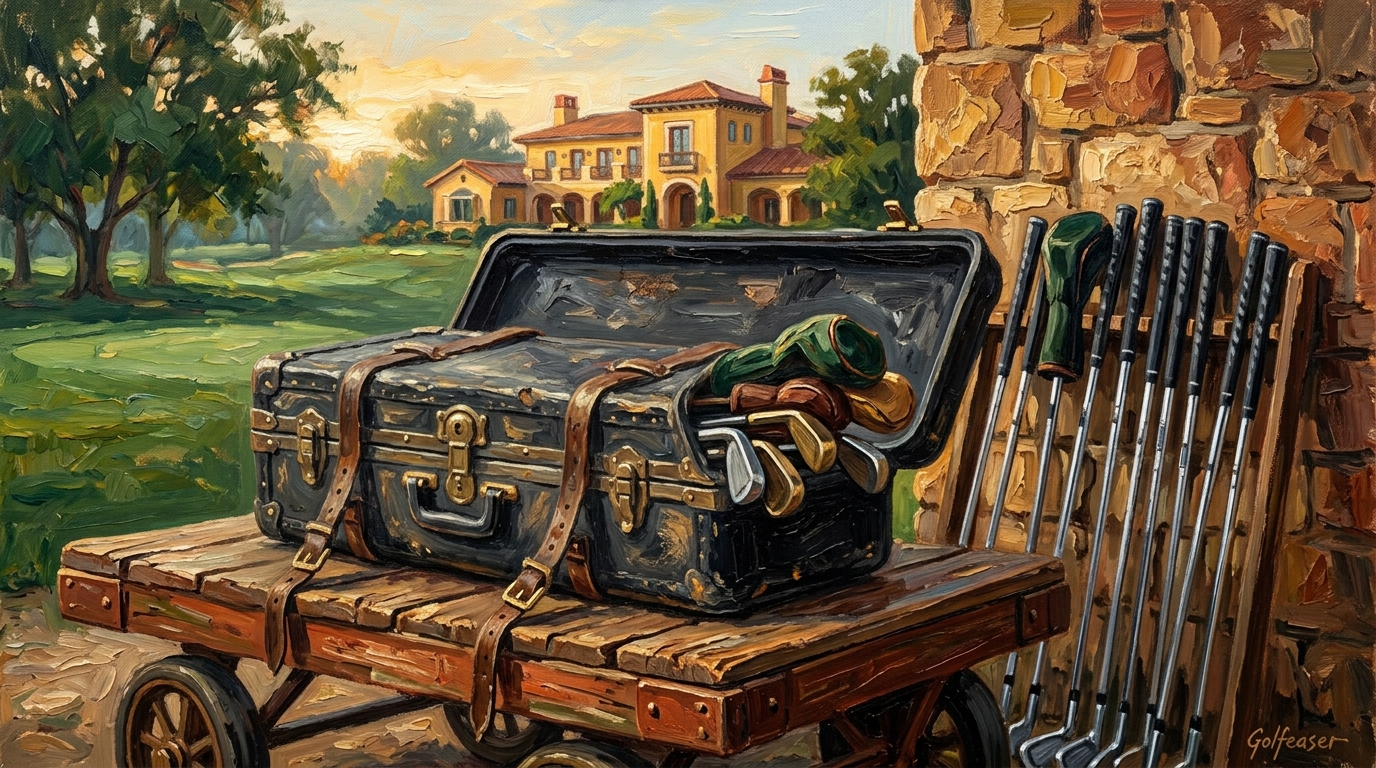
Renting clubs for one round is kinda like borrowing someone's boots for a hike — fine for a day, weird for a week.
For most buddy trips of three rounds or fewer at a mainstream resort, renting is the better financial and logistical call — a checked golf bag typically runs $55 to $110 round trip once fees, weight, and oversize risk are added up, while a decent rental set runs $45 to $90 per round. Once you're playing four or more rounds, or you own clubs you genuinely can't replicate off a rental rack, flying with your own set usually wins. The rest of this is just showing the work.
This is one of a dozen small decisions baked into planning a buddy trip that doesn't fall apart by day two, and it's worth settling before anyone books a flight.
Here's the thing nobody talks about: this decision isn't really about golf. It's about whether you want to spend the first ninety minutes of your buddy trip babysitting a bag, or spend them at the bar arguing about tee times. Both are valid ways to improve your own experience of the trip — you just have to pick the one that actually fits how you travel.
What Airlines Actually Charge to Fly With Your Clubs
Most major carriers treat a golf bag as one regular checked bag, not a special oversized item. Delta, for example, allows a golf bag up to 115 linear inches and 50 pounds before extra fees kick in, and it counts as a normal checked bag rather than triggering an automatic sporting-equipment surcharge — as long as it's packed in a hard-shell case or a soft travel bag with a signed liability release for scuffs.
The catch is in the math, not the rule. If the golf bag is your only checked bag, you're paying one standard bag fee — no different from checking a suitcase. If it's your second bag alongside a regular suitcase, which is how most guys travel on a trip, you're paying second-bag pricing. On several major carriers that jumped again this spring, second-bag fees now run around $55 one-way, which puts you at roughly $110 for the round trip — before anyone's even swung a club.
Then there's weight. Pack a rain suit, an extra dozen balls, a second pair of shoes, and a rangefinder in that travel bag, and you're flirting with the 50-pound line most airlines use before overweight fees apply — fees that can run $100 or more, each way, on top of the bag fee you already paid. I've watched a buddy get hit with a $150 overweight charge at 6 a.m. because he packed his golf shoes in the club bag instead of his suitcase. He was still annoyed about it on the back nine.
✈️ What Flying With Your Clubs Actually Costs
- 💰 Roughly $55 one-way / $110 round trip as a second checked bag on most major carriers
- ⭐ Usually free of a special "golf surcharge" if it's within standard size and weight limits (Delta: 115 linear inches, 50 lbs)
- 🚫 Watch the 50-lb line — shoes, rain gear, and extra balls push a travel bag over it fast, adding $100+ each way
- 📍 If it's your only bag, you're paying a standard bag fee, not an extra one — the second-bag scenario is where the real cost hides
Nobody puts these numbers on a poster in the pro shop, which is exactly why the group text always underestimates the flying option until someone actually books it.
What a Rental Set Actually Costs (And What You're Actually Getting)
Mike asked me why I always check the pro shop's rental rates before I even book the flight. Because the rack tells you more about the trip than the tee sheet does.
Rental clubs at a mainstream golf resort typically run $45 to $90 per round, sometimes bundled into a stay-and-play package where it barely shows up as a line item. Premium demo sets — the kind resorts stock at destination courses that want you buying clubs on the way out — can run $100 to $150 a round, which starts to erase the savings fast if you're renting for four days straight.
Quality varies more than the price does. A resort that turns over inventory every season will hand you something close to current, with grips that haven't gone slick and a driver that's actually been fit to a reasonable range of swing speeds. A resort that hasn't updated its rack since a previous decade will hand you mismatched irons, a putter with a dead face, and wedges that have clearly lost every battle with a bunker. There's no way to know which one you're getting until you're standing at the rack, which is the real risk — not the money, the uncertainty.
💰 What a Rental Set Usually Runs
- ⛳ $45–$90 per round at a typical mainstream resort
- 💎 $100–$150 per round for premium demo sets at destination courses
- ✅ Call ahead and ask the specific brand and how recently the sets were replaced — don't just ask "do you have rentals"
- 🚫 Don't assume left-handed sets or stiff-flex shafts are in stock without asking directly — this is the most common trip-morning surprise
The Hidden Costs Nobody Puts on the Sticker
The bag fee is the number everyone argues about in the group chat. It's rarely the whole number — and it's exactly the kind of line item that blows a hole in the real cost of a golf trip if nobody accounts for it upfront.
Flying with your own clubs means owning a travel case, which runs anywhere from $60 for a basic soft bag to $300+ for a hard-shell case that actually protects your sticks through baggage handling. That's a sunk cost for future trips, but it's real money the first time, and it's easy to forget when you're comparing a single trip's math. There's also the extra trunk space and the extra fifteen minutes at the rental car counter explaining why you need the SUV instead of the sedan — small, but it adds up across a whole trip.
Renting has its own invisible costs. Most resorts put a hold on your credit card for the club deposit — sometimes $200 or more — which sits there until checkout even if nothing gets damaged. You also lose the practice-round warmup that comes from hitting a few range balls with your own driver the day before; renting means your first real swing with the set is often on the first tee, in front of the group, which is its own kind of pressure. And if the rental shop runs out of your size or your dominant hand's sets on a busy weekend, you're not getting a refund on the disappointment.
🔧 Costs That Don't Make It Into the First Conversation
- 🧳 A travel case if you're flying — $60 to $300+, one-time but real
- 💳 A credit card deposit hold on rentals, often $200 or more, sitting until checkout
- ⏱️ Lost warmup time with a rental set — your first swing with it may be on the first tee
- 📦 Zero guarantee of your size or handedness on a busy rental weekend
Once both sides get the hidden costs added in, the gap between renting and flying narrows for short trips and widens for long ones — which is really the whole decision in one sentence.
When Flying With Your Own Clubs Actually Wins
There's a version of this decision that has nothing to do with the spreadsheet. Some clubs aren't replaceable for a weekend, and pretending otherwise is how you end up three-putting with a stranger's mallet on a green you've been looking forward to for a year.
I flew with my own driver to a five-round trip in Bandon a few years back — an old bent-shaft Callaway that I'd bent back myself after running it over with a cart, which sounds insane and is also completely true — because no rental rack anywhere was going to reproduce whatever weird, forgiving thing that shaft does now. Something happened to that trip that wouldn't have happened with a stranger's driver in my hands: I actually played like myself, for five straight rounds, instead of spending day one figuring out a new set.
The math tips toward flying once you're past three rounds — the per-round savings from renting shrinks with every additional round, while the bag fee stays flat whether you play three rounds or seven. It also tips toward flying if this is the trip your group actually keeps score on for bragging rights, the kind where showing up with your own dialed-in set is part of impressing the guys who've seen you play badly for a decade. And it tips toward flying if you've got equipment you genuinely can't replicate — especially once you've already trimmed your bag down to what you actually need and every club left in there is earning its spot: a putter you've had regripped four times because you refuse to give it up, irons built around a swing quirk a fitter corrected for, a driver loft nobody stocks on a rental rack.
None of that is really about golf performance. It's about walking into a trip your group will talk about for years feeling like yourself, not like a guy borrowing someone else's game for four days.
When Renting Is the Smarter Move
Is renting ever the obviously right call? Yes — for one specific kind of trip more than any other.
Short trips are the clearest case. A quick two- or three-round weekend rarely justifies flying with clubs once you add up the fees against a $50-a-round rental — the math simply doesn't work in your own clubs' favor until the round count climbs. That matters most on your first trip, when you're still figuring out what to expect on a buddy trip in the first place and don't need one more variable to manage. The reasoning holds even tighter if you're flying somewhere you've never played before, since a resort's own rental set is often better-suited to that specific course than whatever you brought from home.
Guys who fly often are the other clear case. If work already has you living out of a suitcase most weeks, adding a fragile, oversized bag to that rotation is its own kind of misery — not financial misery, just the daily grind of one more thing that can get lost, delayed, or scuffed between connections. For that guy, and for anyone planning one of the budget-friendly buddy trips that don't require a second mortgage, a decent rental is the smarter trade every single time, even on a longer trip, because his tolerance for babysitting luggage is already spent on the job.
The Real Math: A Worked Example
Numbers settle arguments better than opinions do. Here's how a real three-round trip and a real five-round trip actually shake out.
Three rounds, flying: $110 round-trip bag fee, plus a travel case you already own (or a one-time $150 if you don't) — call it $110 to $260 total, spread across three rounds. Three rounds, renting: $60 average per round × 3 = $180, plus a refundable deposit hold that costs you nothing if the clubs come back clean. Renting wins here, usually by $50 to $80, before you even account for the hassle saved.
Five rounds, flying: Same $110 round-trip bag fee — it doesn't go up because you're playing more golf. If you already own a case, your total cost stays at $110 for the whole trip. Five rounds, renting: $60 average per round × 5 = $300. Flying wins here, by roughly $190, and the gap only grows on a six- or seven-round trip.
The breakeven point sits right around four rounds for most guys, which is exactly why "how many rounds are we actually playing" is a better first question for the group chat than "should we rent or fly." Whatever the final number comes out to, run it through the group the same way you'd handle any other line item — splitting golf trip costs fairly works the same for a club-rental tab as it does for lodging and green fees.
If You Decide to Fly: Do This
Traveling with your own sticks rewards a little preparation and punishes none at all.
Use a hard-shell case if you're checking clubs more than once or twice a year — soft bags are lighter and cheaper, but a hard case is the difference between a scuffed headcover and a snapped graphite shaft somewhere over Ohio. Weigh the packed bag at home before you leave; a $20 luggage scale has saved more than one buddy trip from an ugly surprise at check-in. Take your shoes, rain gear, and extra balls out of the club bag and put them in your suitcase instead — it's the single easiest way to dodge the overweight line, and it pairs well with a broader approach to packing for a golf trip without overpacking in the first place. And get to the airport early enough that an oversized-item line doesn't turn into the reason your foursome misses the tee time — nothing sours a trip faster than being the guy who held up the group before the first ball's even in the air.
If You Decide to Rent: Do This
Renting rewards a phone call more than it rewards showing up and hoping.
Call the pro shop directly, not the front desk, and ask what brand and how recently the fleet was refreshed — "we have rentals" tells you nothing useful. Confirm your handedness and shaft flex are actually in stock, especially if you're left-handed or need stiff shafts, since that's the most common morning-of surprise. Ask if you can hit a few range balls with the driver before your tee time instead of finding out how it feels on hole one. And check the deposit policy before you hand over a card — knowing it's a hold, not a charge, saves you a confusing moment when the statement posts three days later. If your group already uses one of the apps for organizing a buddy trip, drop the rental confirmation number in there so nobody's asking about it in the parking lot.
The Rent-vs-Fly Bottom Line
⛳ Renting vs. Flying — The Short Version
- ✅ Three rounds or fewer: rent. It's usually $50–$80 cheaper and skips the airport hassle entirely.
- ✅ Four-plus rounds, or clubs you can't replace: fly. The flat bag fee starts beating per-round rental costs fast.
- 💰 Budget $55–$110 round trip to fly, $45–$150 per round to rent — the gap narrows or widens based on round count, not luck.
- 🔧 Either way, ask the specific questions ahead of time — brand and fleet age for rentals, weight and case type for flying.
Whichever way you go, the point of the trip was never really the clubs. It's the four days with the guys who'll still be asking about that shot on 14 two Christmases from now.
Questions From Guys Actually Booking This Trip
Does renting golf clubs actually save that much money compared to flying with your own? On a short trip, yes — usually $50 to $80 across three rounds once you account for bag fees and the risk of overweight charges. On a longer trip, the math flips, since a flat bag fee gets cheaper per round the more you play.
Will rental clubs actually be decent, or is it a gamble? It depends entirely on the resort. Calling ahead and asking specifically what brand and how recently the fleet was updated is the difference between a set that plays fine and one you're fighting all day.
What happens if I fly with clubs and the airline damages or loses the bag? Most airlines require a signed liability waiver for soft golf bags specifically because damage claims are common — a hard-shell case is the better protection if this worries you. Loss is rarer than damage, but it happens most often on tight connections, so build in buffer time when you can.
Is it cheaper to ship clubs instead of flying with them or renting? Sometimes, depending on distance and how far ahead you can ship — running the shipping math separately is worth it before you commit either way, since shipping avoids both the airport hassle and the rental uncertainty.
What if half the group wants to fly with clubs and half wants to rent? That's normal, and it's not a problem to solve — it's fine for some guys to rent while others fly, as long as everyone books their choice with enough lead time that nobody's scrambling the morning of the first tee time.
🏌️ Got a Golf Story?
Share it with us. Every story we publish earns the author a free copy of The Weekend Golfer's Social Playbook — our three-step system for finding your people, running trips that actually come together, and earning the right to brag at the 19th hole.
Or join the Golfeasers — free weekly content for people like us.
More for Planning Your Next Trip
- How Many Rounds a Day Is Too Many on a Trip
- Myrtle vs. Scottsdale: The Regular-Guy Verdict
- How to Be the Trip Captain Without Losing Your Mind
- The Slow Roller's Guide to a Budget Buddy Trip

Johnny is a 25-year weekend golfer who's double-booked tee times, forgotten his clubs an hour from the course, and made pretty much every other trip-planning mistake there is — so you don't have to. Guided by The Golfeaser Manifesto, he started Golfeaser.com to prove that weekend golfers are a special, funnier breed who improve the experience, not just the scorecard. He's also the guy behind The Weekend Golfer's Social Playbook — a three-step system for finding your people, running trips that actually come together, and earning the right to brag at the 19th hole.
